To cut a persimmon, first check which kind you have. A Fuyu, the squat, tomato-shaped one, can be eaten while it is still firm: trim off the leafy top and cut it into wedges or slices, much like an apple. A Hachiya, the taller acorn-shaped one, has to be completely soft before you eat it: halve it and scoop the flesh out with a spoon. The skin is edible, so peeling is your choice.
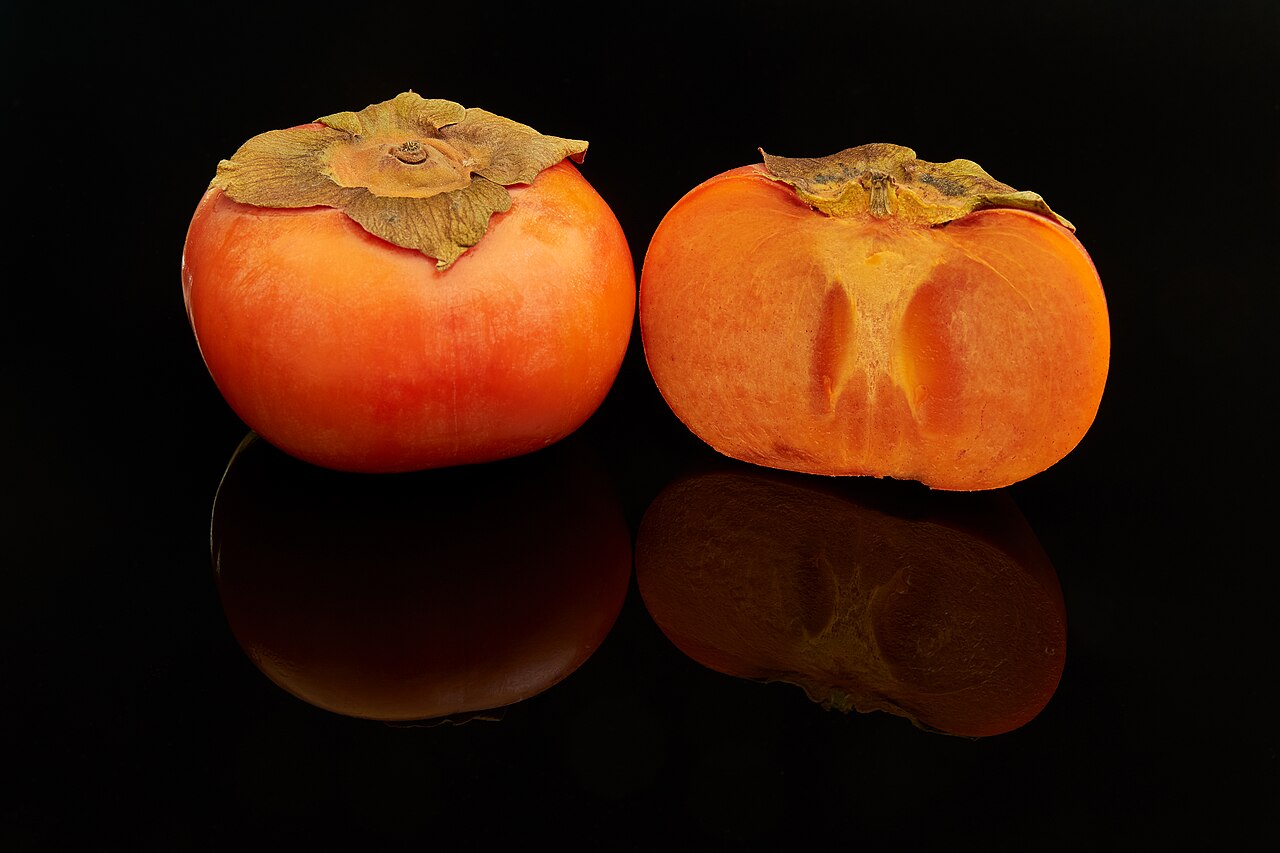
Fuyu or Hachiya: why it changes the cut
Persimmons come into stores in the fall, and Cook’s Country says the two types you are most likely to see are Hachiya and Fuyu. The shape tells them apart: Hachiyas are acorn-shaped and Fuyus are tomato-shaped.
The real difference is astringency. According to Cook’s Country, a Hachiya must ripen fully, until it is soft and squishy, before it can be eaten; otherwise it will dry out your mouth and leave a harsh, bitter taste. Fuyus are nonastringent and can be eaten while still firm. University of Illinois Extension describes the same split: a Hachiya is quite tart until it is fully ripe, when its tannins drop sharply, while a Fuyu can be eaten before it is fully ripe because it is not as astringent.
In practice, a firm Fuyu is a knife fruit and a soft Hachiya is a spoon fruit. If you cannot tell which one you have, do not taste a firm one; wait until it is very soft, which is when Illinois Extension says a persimmon is ripe.
Ripen, store and wash
Cook’s Country says both varieties should be ripened at room temperature. Illinois Extension suggests keeping unripe persimmons on the counter until ripe, then moving them to the refrigerator crisper drawer and using them within two to three days.
Wash the fruit just before you cut it. The FDA’s advice is to rinse produce before you peel it, so the knife does not carry dirt and bacteria onto the flesh. Rub the persimmon gently under plain running water, with no soap or produce wash, then dry it with a clean cloth or paper towel.
How to cut a firm Fuyu
- Trim the top. Illinois Extension’s instruction is simply to slice off the stem end. Lay the fruit on its side and cut a thin slice off the top to remove the leafy cap and stem, or cut a shallow cone around the cap with the tip of a paring knife, the way you would core a tomato.
- Peel, or leave the skin on. The skin is edible, Illinois Extension says, but you can peel it with a knife if you prefer. On a firm Fuyu a vegetable peeler works too.
- Halve it and set it flat. A whole persimmon rolls, so stand it on its trimmed top, cut straight down through the center, and lay each half cut side down. Keep your fingertips curled, behind the line of the blade.
- Cut wedges. Cut each half into three or four wedges, angling the knife toward the center. Pick out any seeds as you go.
- Or cut slices. For a salad, slice each half thinly across, keeping the flat side on the board.
For cubes, cut a half into planks, lay the planks flat and cut them into sticks, then cut across the sticks. A Fuyu that has turned soft still cuts, but use thicker pieces and move them with the flat of the knife rather than your fingers. The moves are the same ones in our guide to cutting an apple, minus the core.
How to cut a soft Hachiya
A ripe Hachiya is too soft to slice neatly. Treat it like a pudding in a thin skin.
- Set it on the board. Stand it on its flat leafy top, or lay it on its side if it will not stay upright.
- Halve it. Cut down through the fruit with a light sawing stroke and little pressure, so you open the skin rather than squash the fruit.
- Scoop. As Illinois Extension notes, you can simply scoop out the flesh with a spoon. Scoop it into a bowl, leave the skin and the leafy cap behind, and remove any seeds.
For a single serving you can skip the board: cut off the top and eat the flesh from the skin with a spoon. Cook’s Country lists jams, quick breads, cakes and persimmon pudding among the ways to cook persimmons, and Illinois Extension adds smoothies, salsa and baked goods; soft, scooped flesh goes straight into any of them.
Which knife and board
A petty knife suits halving and wedging a Fuyu, and a paring knife suits trimming the leafy top; our guides to the petty knife and paring vs utility knives explain the difference. A Hachiya mostly needs a spoon. Coring the top uses the same small cone cut as cutting a tomato. For other fruit and vegetables, browse all our how-to-cut guides.
Sources: Cook’s Country, What Is a Persimmon? (Hachiya and Fuyu in the fall, acorn and tomato shapes, Hachiya must be soft and squishy, Fuyu can be eaten firm, ripen at room temperature, cooked uses); University of Illinois Extension, Persistent Persimmons (tannins and astringency, Hachiya tart until fully ripe, Fuyu less astringent, storage, slice off the stem end, edible skin, peel or scoop with a spoon, uses); FDA, 7 Tips for Cleaning Fruits, Vegetables (rinse before peeling, no soap, dry).