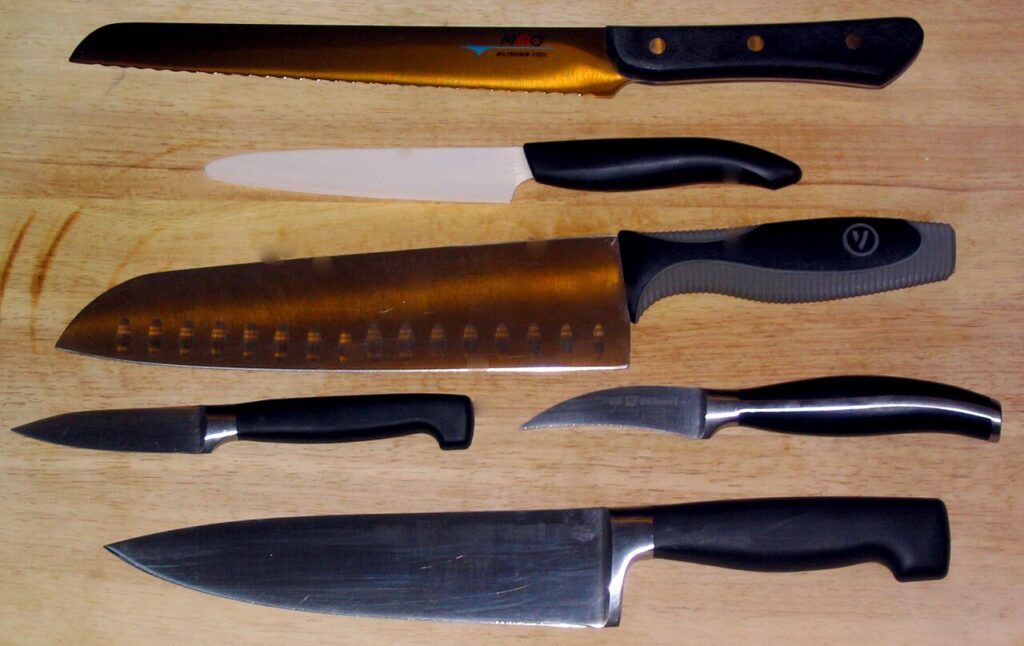
For a dull ceramic knife, use only the sharpener named for your exact knife. For a chip, check the maker’s service route and region: a limit for home sharpening may be smaller than a professional repair limit. If the blade is broken or a piece is loose, stop using it.
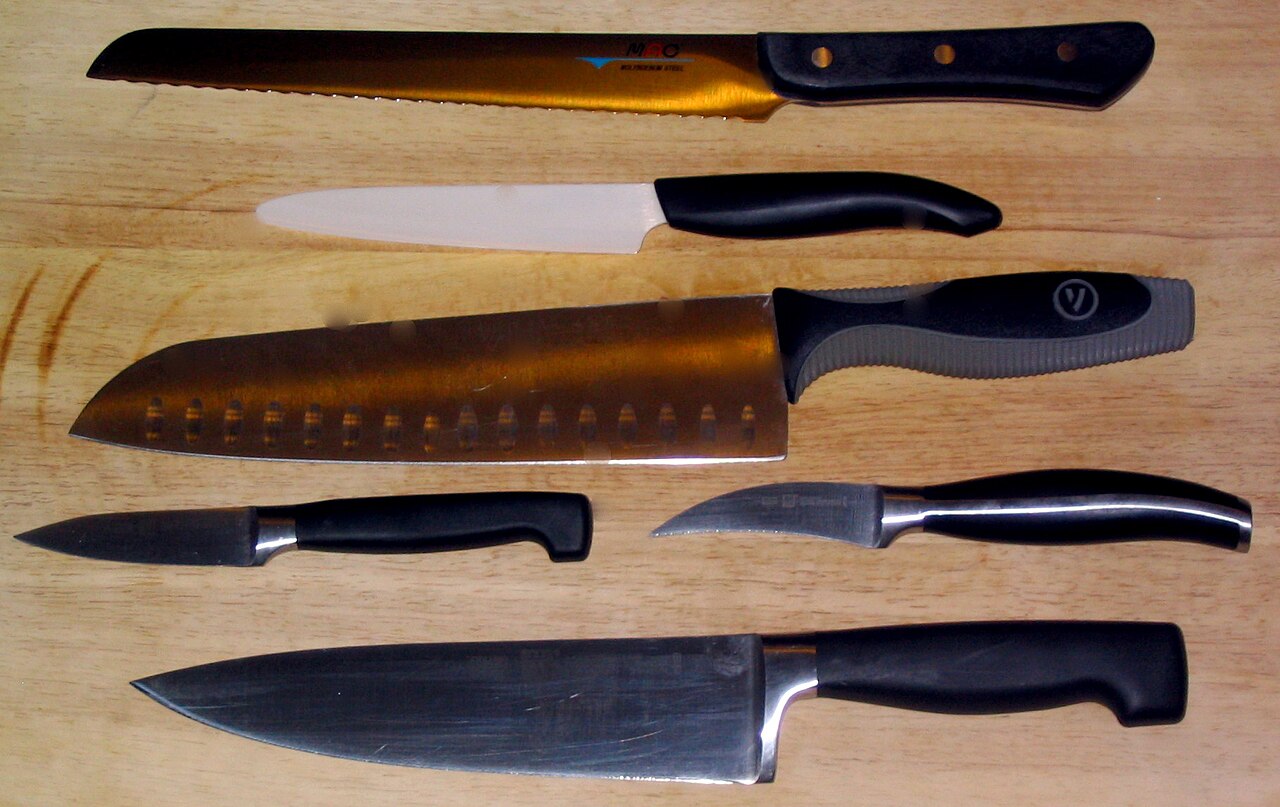
KYOCERA gives different limits for different routes
KYOCERA’s US page names two diamond-wheel home sharpeners for compatible knives: the manual RSD-01-BK and electric DS-38 AZ. The page says these home options can address chips up to 0.5 mm deep; for larger damage it recommends professional resharpening through its listed EVERSHARP service. Check the exact model instructions before using either tool: the name “diamond sharpener” alone does not establish compatibility.
KYOCERA Asia-Pacific describes a separate distributor service that may repair chips up to 10 mm at the tip and 3 mm along the edge. Its FAQ gives a different 0.5 mm limit for the KYOCERA electric home sharpener and excludes other-brand ceramic knives, single-bevel and sashimi knives, serrated or thick blades from that tool. Those figures describe different methods in one maker’s regional guidance. They are not interchangeable limits for every ceramic knife. Read the KYOCERA US sharpening page or Asia-Pacific FAQ and service route for the applicable model and location.
Choose by the condition you see
- Dull, with no visible damage: check the maker’s model-specific manual. Use a home sharpener only if it explicitly accepts that knife; otherwise contact the maker’s service route.
- Visible chip: stop cutting with it, identify the maker and model, then compare the maker’s professional service limits for your region. Do not apply a home-tool limit to a repair service.
- Broken blade or loose fragment: stop using it and keep it away from food and hands. Ask the maker how it should be handled before attempting repair or shipment.
- Maker or model unknown: pause before sharpening. Ask the retailer or a qualified service to identify the knife and compatible route.
Other brands may set different limits or offer no repair service in your region. The KYOCERA examples above show why a number or sharpener recommendation should stay attached to its maker, product and service route.
For the wider material choice, see our ceramic vs steel kitchen-knife comparison. For other knife materials and tools, see the Japanese-knife sharpener guide; ceramic compatibility still comes from the knife maker.