To cut kohlrabi, rinse it, remove any attached leaves, and trim a thin slice from the base. Stand the bulb on that flat base and cut it from top to bottom into halves. Lay each half cut-side down, peel off the complete tough outer layer, then cut the pale flesh into slices, matchsticks, or cubes.
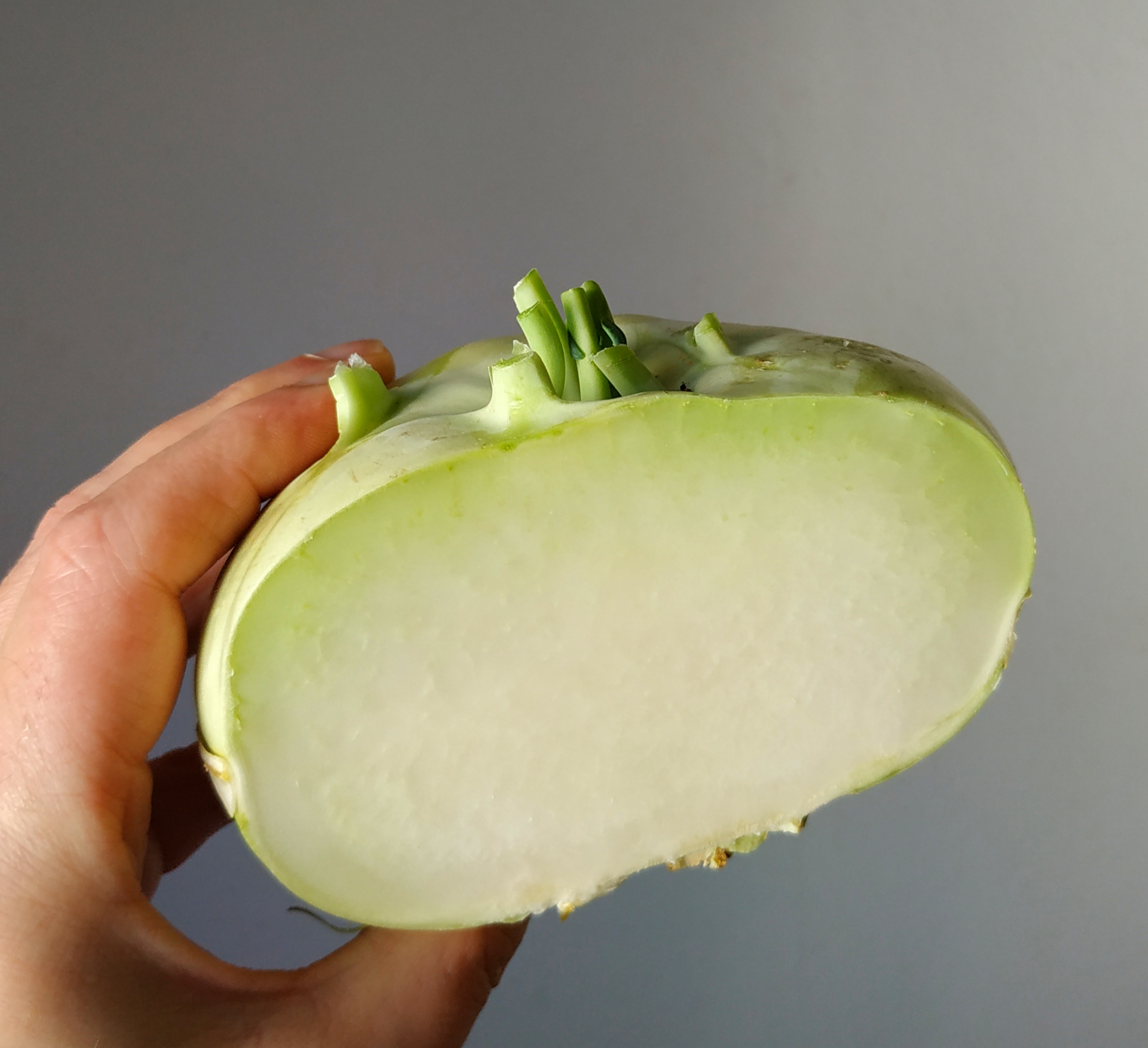
Rinse, trim, and make a flat side
Rinse the outside under plain running water and gently rub it before peeling. Dry it with a clean towel. Remove any attached leaves before setting the bulb on a stable cutting board.
Trim a thin slice from the base so the bulb stands securely. Set it on that flat end and cut from top to bottom to divide it in half. Put each half cut-side down before continuing. Keep the fingertips of your holding hand curled back; use a smooth slicing motion rather than pressing straight down.
Peel the outer layer
Kohlrabi needs peeling before use, and the outer layer is tougher than the flesh. Keep each half flat-side down while you work. Use a vegetable peeler on the broad surface if it cuts cleanly; for small, tender bulbs, a paring knife is also suitable. If using a knife, pare in short, controlled strips with the cut face supported by the board.
Do not stop only because the green or purple color has disappeared. Continue removing the tougher outer layer until you reach the smooth, pale flesh. The peeled flesh is ivory across the green, white, and purple varieties.
Choose a cut
- Slices: Keep the peeled half on its flat face and cut across it into even half-moon slices.
- Matchsticks: Cut thin slabs from the half. Lay each slab flat, stack only a few at a time, then cut lengthwise into narrow sticks.
- Cubes: Cut thicker slabs into strips, line up the strips, and cut across them into cubes.
The peeled flesh can be eaten raw or cooked. Choose slices, matchsticks, or cubes to suit the dish; for pieces cooking together, keep their size consistent and follow the recipe’s requested size. For parsnips, turnips, rutabaga, and beets, see our root-vegetable cutting guide.
For the rest of the series, browse our how-to-cut guides.
Sources: Purdue Extension FoodLink, Kohlrabi (peeling, leaves, peeled flesh, and common cut shapes); Utah State University Extension, How to Grow Kohlrabi in Your Garden (swollen stem, tougher outer layer, raw or cooked use); Mississippi State University Extension, Kitchen Knife Basics (flat surfaces, curled fingertips, slicing motion); U.S. Food and Drug Administration, 7 Tips for Cleaning Fruits and Vegetables (rinse before peeling/cutting, plain water, dry).