Use a potato masher if you like a rustic, slightly chunky mash and want to work straight in the pot. Use a ricer if you want a fluffy, lump-free mash: it presses cooked potato through small holes instead of crushing it. A food mill comes close to a ricer and gives a smoother finish. Avoid a food processor or electric mixer for mashed potatoes, which can turn them gluey.
How each tool works
A potato masher is a handle with a flat head that you push down through cooked potatoes. Wikipedia’s potato masher article says the head is most often a heavy wire bent into a rounded zigzag, or a plate with holes or slits. Each press crushes the pieces under the head, so you mash in stages and stir between strokes.
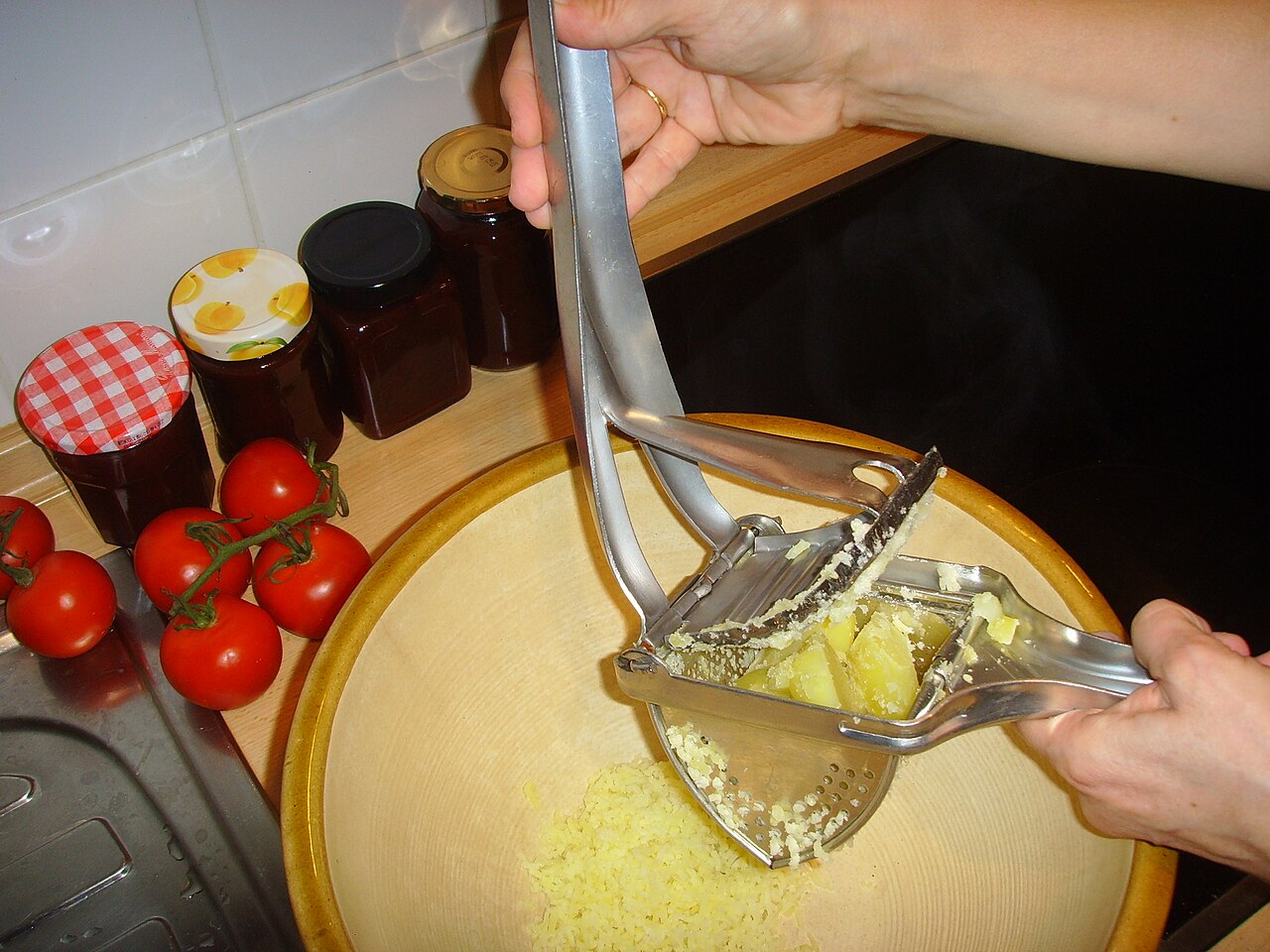
A ricer works like a large garlic press. The Farmers’ Almanac describes a hinged basket with small perforations in the bottom and two long handles: you drop in cooked potato chunks, close the handles and squeeze, and the potato comes through the holes as fine strands about the width of a grain of rice. It extrudes the potato rather than compressing or overworking it.
Masher vs ricer at a glance
| Potato masher | Potato ricer | |
|---|---|---|
| Texture | Rustic and chunky; some lumps are normal | Fluffy and even; can be a little grainy |
| Where you work | Directly in the pot or bowl | Over a bowl or the pot, a few chunks at a time |
| Skins | Can be mashed in with the potato | Skins stay in the basket; clear them between batches |
| Other jobs | Mashing other soft cooked foods | Egg yolks, gnocchi, squeezing water from thawed frozen spinach |
| Cleaning | Simple; rinse the head | Rinse the basket holes before the starch dries |
What Cook’s Illustrated found
Cook’s Illustrated compared mashing methods and settled on the ricer as the most effective tool for a fluffy texture, calling it the gentlest touch. Its tasters did find riced potatoes a little grainy. A masher, it found, is fine for a rustic, chunky texture but gives a mash that is far from fluffy, and even with a good workout some lumps are inevitable.
The same comparison found a food mill’s sweeping blade gave potatoes that were almost as fluffy as riced ones and far smoother. A food processor’s vigorous action made them gluey, and an electric mixer did the same.
When to choose a masher
Choose a masher for weeknight mashed potatoes, smashed potatoes with the skins on, or a mash you want to have some body. It is quick, there is no extra bowl, and Wikipedia notes that mashers are also used for a variety of other foods. Mash the potatoes while they are hot, add butter and liquid as you go, and stop as soon as the texture suits you.
When to choose a ricer
Choose a ricer when you want a smooth, airy mash for a holiday table, or when the potatoes go into something that needs an even texture. The Farmers’ Almanac also uses one for egg yolk fillings, gnocchi, spaetzle, mashed cauliflower or rutabaga, applesauce, and squeezing water from thawed frozen spinach.
- Cut the potatoes evenly before cooking. Same-size chunks cook through together; our guide to cutting potatoes covers cubes.
- Drain them well. Pour them into a colander and let them steam dry briefly.
- Rice them while hot. Fill the basket about halfway, press over a bowl or the empty pot, and scrape the strands from the underside.
- Fold in the butter and milk gently. Stir with a spatula or wooden spoon just until combined; heavy beating undoes the ricer’s work.
Do you need both?
Not usually. If you make mashed potatoes now and then and like them homestyle, a masher is enough. If you want a fluffier result, or you make gnocchi, a ricer is the more useful tool to add. A food mill covers similar ground with a smoother finish but takes more space. Before buying, look for a sturdy hinge and handles you can squeeze comfortably; the kitchen tools guide explains how to judge which tools last.
Sources: Cook’s Illustrated, Which Mashing Method Is Best? (ricer most effective for fluffy texture, gentlest touch, riced potatoes a bit grainy; masher fine for rustic chunky texture, lumps inevitable; food mill almost as fluffy and smoother; food processor and electric mixer make gluey potatoes); Wikipedia, Potato masher (zigzag wire or perforated plate head; used for many foods); Farmers’ Almanac, Why You Need a Potato Ricer (hinged perforated basket and two handles; strands about the width of a grain of rice; extrudes without overworking; other uses).