To cut lemongrass, keep the pale lower part of the stalk and cut off the dry green tops and the root end. Peel off the tough outer layers until you reach the tender core. Then cut for the way the lemongrass will be used: bruise long pieces to flavor a broth and lift them out before serving, or slice the core into very thin rounds, or mince it, when the lemongrass is meant to be eaten.
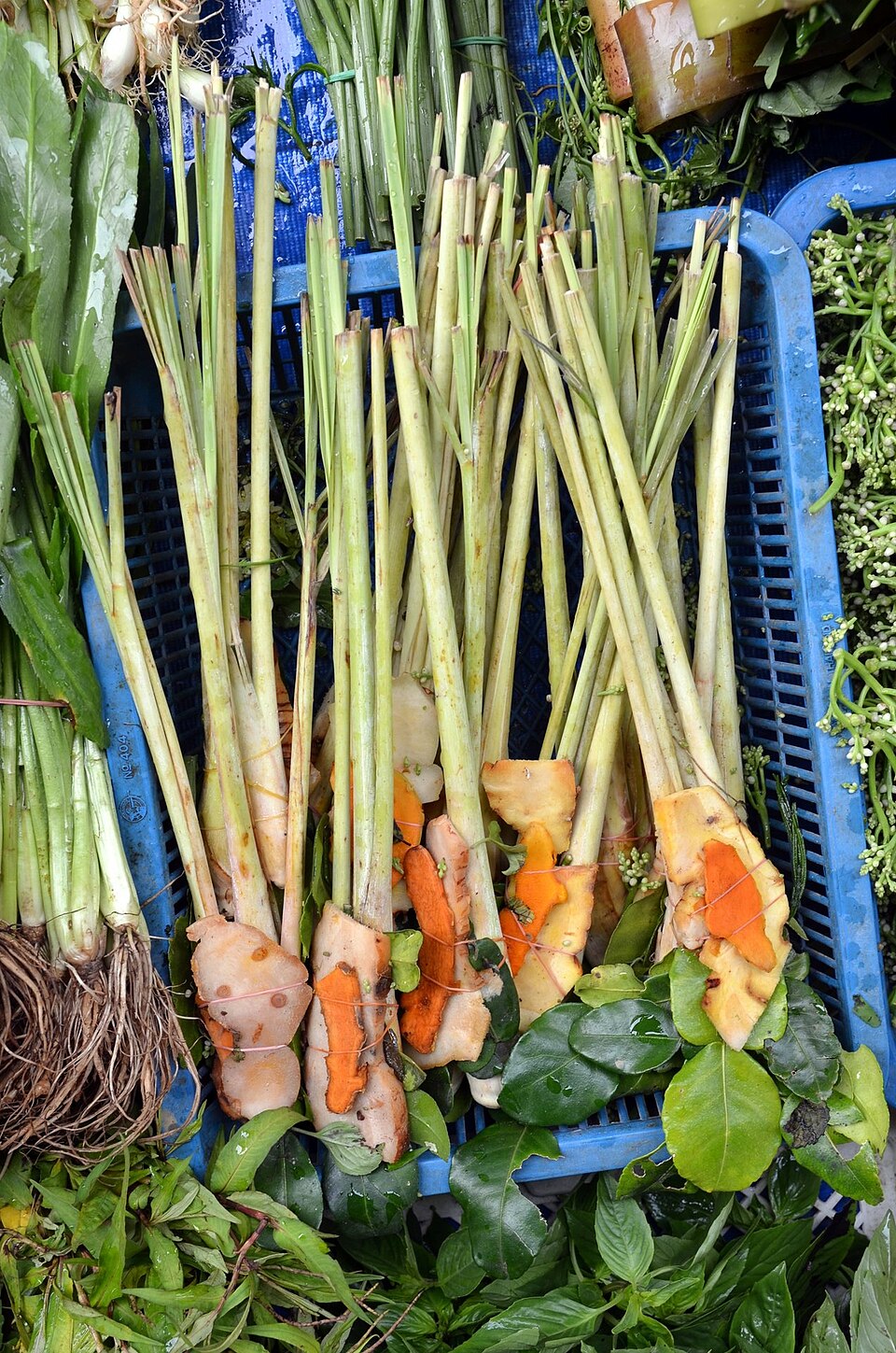
Which part of the stalk you use
Lemongrass is a tropical grass, and the part sold for cooking is its stalk. University of Wisconsin Extension’s horticulture guide says to discard the leaves and the woody outer layers, and notes that the whole stalk is too hard to be eaten. UF/IFAS Extension in Clay County uses just the bottom 4 or 5 inches of each stalk, and the UC Master Gardeners of Sonoma County call the bulbous base the most flavorful and tender part.
At the shop, the Wisconsin guide suggests firm stalks with fresh to slightly dry tops and a somewhat heavy, moist base.
Trim and peel
- Rinse and dry. Rub the stalks under plain running water and dry them with a clean cloth or paper towel, as the FDA advises for produce in general.
- Cut off the root end. Slice away the hard, dry base where the roots were, taking no more than you need to reach clean, pale stalk.
- Cut off the tops. Cut across where the stalk turns from pale and firm to green and fibrous, usually leaving the bottom 4 to 5 inches that the Clay County guide uses. Keep the tops if you make tea.
- Peel. Pull off the outer layer or two, the woody layers the extension guides discard, until the stalk underneath is smooth and pale.
Take care with a whole bunch. The Wisconsin guide describes the leaves as finely serrated, rough enough to cut skin, and the Sonoma gardeners suggest gloves when harvesting for the same reason.
Bruise it for broth, curry or foil packets
According to Wisconsin Extension, the stalk is usually smashed and simmered in liquid to give the dish its lemony flavor, then removed before serving. Cut the trimmed stalk into lengths that fit your pot, lay them on the board and press or tap along each piece until it splits; when crushed, the guide notes, its fragrance resembles lemon.
Use a rolling pin, a pestle or the bottom of a small heavy pan for this, not the blade of a Japanese knife. A thin, hard edge is made for cutting, not for striking; our guide to why Japanese knives chip explains how sudden impacts damage it. If you own a mortar and pestle, the pestle is the bruising tool.
Utah State University Extension also suggests putting crushed stalks in the bottom of foil wrappings, with the meat or vegetables on top.
Slice or mince the tender core
For salads, stir-fries and pastes, where the lemongrass stays in the dish, use only the tender core. Illinois Extension calls the tender white portion of the stem the most desirable part.
- Lay it flat. Put the peeled stalk flat on the board with the base end toward the knife and your guiding hand curled behind it.
- Slice thin rounds. Start at the base and slice straight across, keeping each round as thin and even as you can.
- Stop at the fibers. When the rings start to look woody or show a tough outer ring, stop slicing and put the rest in the broth pile.
- Mince if the recipe asks. Gather the rounds into a pile and chop through them until fine, as you would when mincing ginger.
The green tops, and storing it
The green tops are too tough to eat but still carry flavor. Illinois Extension lists the leaves for flavoring fish, soups, curries, sauces and teas. Tie them in a bundle so they are easy to lift out.
The Clay County guide keeps the stalks in a bag in the freezer for several months, and Utah State University Extension says lemongrass can be frozen for up to six months.
Knife and grip
Paper-thin rounds of a narrow, fibrous stalk need a sharp, thin edge more than a particular shape. A gyuto or a santoku does it well; gyuto vs santoku compares the two. A peeled stalk is slippery, so a secure pinch grip on the blade and a claw-shaped guiding hand matter more than speed; how to hold a Japanese knife shows both. For other ingredients, see all our how-to-cut guides.
Sources: University of Wisconsin–Madison Extension, Lemongrass (discard leaves and woody layers, whole stalk too hard to eat, smashed and simmered then removed, selection, serrated leaves, lemon scent when crushed); UF/IFAS Extension Clay County, Herb Stories: All About that Lemongrass (bottom 4 or 5 inches, peel to the tender layers, freezer); UC Master Gardeners of Sonoma County, Lemongrass (bulbous base, gloves); Illinois Extension, Lemon grass (tender white portion, uses of the leaves); Utah State University Extension, How to Grow Lemongrass in Your Garden (foil wrappings, frozen up to 6 months); FDA, 7 Tips for Cleaning Fruits, Vegetables (plain running water, drying).