Bone-in and boneless legs need different first cuts: free the meat alongside the bone on a bone-in leg; remove the netting from a rested boneless roast. Then slice across the grain for serving portions.
Before you carve
Use a food thermometer when roasting lamb. FoodSafety.gov recommends 145°F (63°C) for whole lamb roasts, then a rest of at least three minutes. Follow your recipe if it calls for longer before carving. Set out a stable board and a platter; a tray can catch the juices.
Carve a bone-in leg
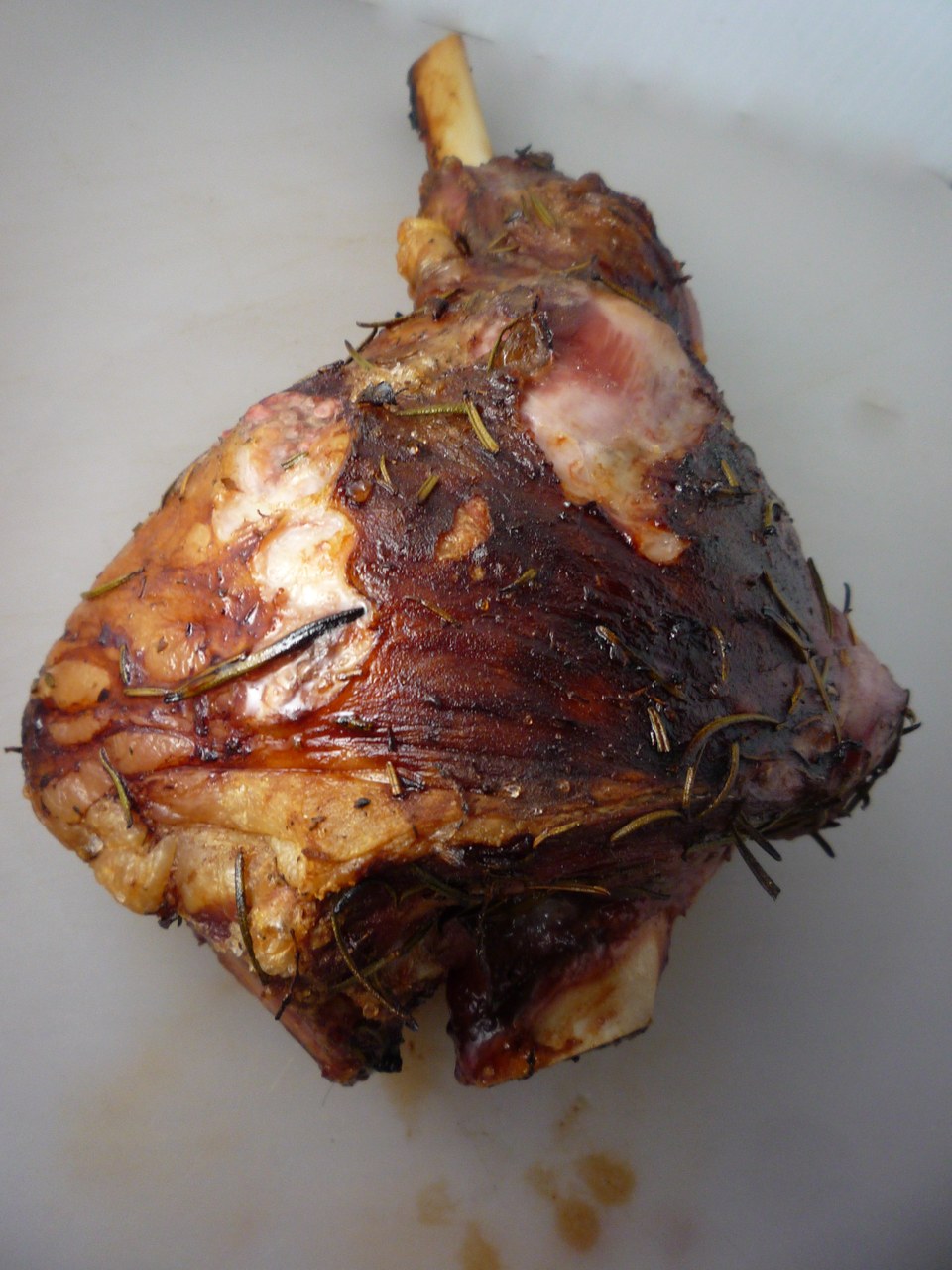
Rest the roast as your recipe directs. Set a bone-in leg meaty-side up with the shank angled down and away. The American Lamb Board’s method releases the meat alongside the bone before slicing the freed sections.
- Steady the shank. If it is too warm to hold, use a clean, dry cloth.
- Free the meat. Use a narrow boning or slicing knife to cut close alongside the bone and release the broad sections. If the blade meets bone, ease back and adjust its angle; do not force or chop through it.
- Separate and slice. Follow the bone on the other side, then lay each freed piece flat. Look for the fine lines of muscle fibres and cut across them into portions. Recheck each piece as you turn it; the fibre direction can differ between sections.
Carve a boneless leg
For a boneless roast, remove the netting after its rest and set the joint flat on the board. The grain is the direction the visible muscle fibres run: cut across them rather than along them, with a long, controlled stroke. Recheck after turning or repositioning the meat because the grain can change. Great British Chefs’ cooked-leg guide also slices across the grain.
A narrow knife helps follow the bone on a bone-in leg; a slicing knife works well for even portions from boneless meat. Use the full blade in a smooth stroke, as Australian Lamb recommends. For other roast methods, see our guides to sujihiki and carving knives and carving a turkey.
Sources: American Lamb Board, “Roasting Guide” (bone-in and boneless steps); Great British Chefs, “How to carve a cooked leg of lamb” (cutting across the grain); FoodSafety.gov, “Cook to a Safe Minimum Internal Temperature” (whole lamb roasts); Australian Lamb, “The Easy Way to Carve Lamb” (holding the shank and full-blade strokes).