To cut a jalapeño, put on thin gloves, rinse the pepper, and cut off the stem. For rings, slice straight across the whole pepper. For strips or dice, halve it lengthwise, scrape out the seeds and the pale veins with a spoon or the knife tip, then cut the halves into strips and the strips into dice. Removing the seeds and veins makes the pepper milder; leaving them in keeps more heat.
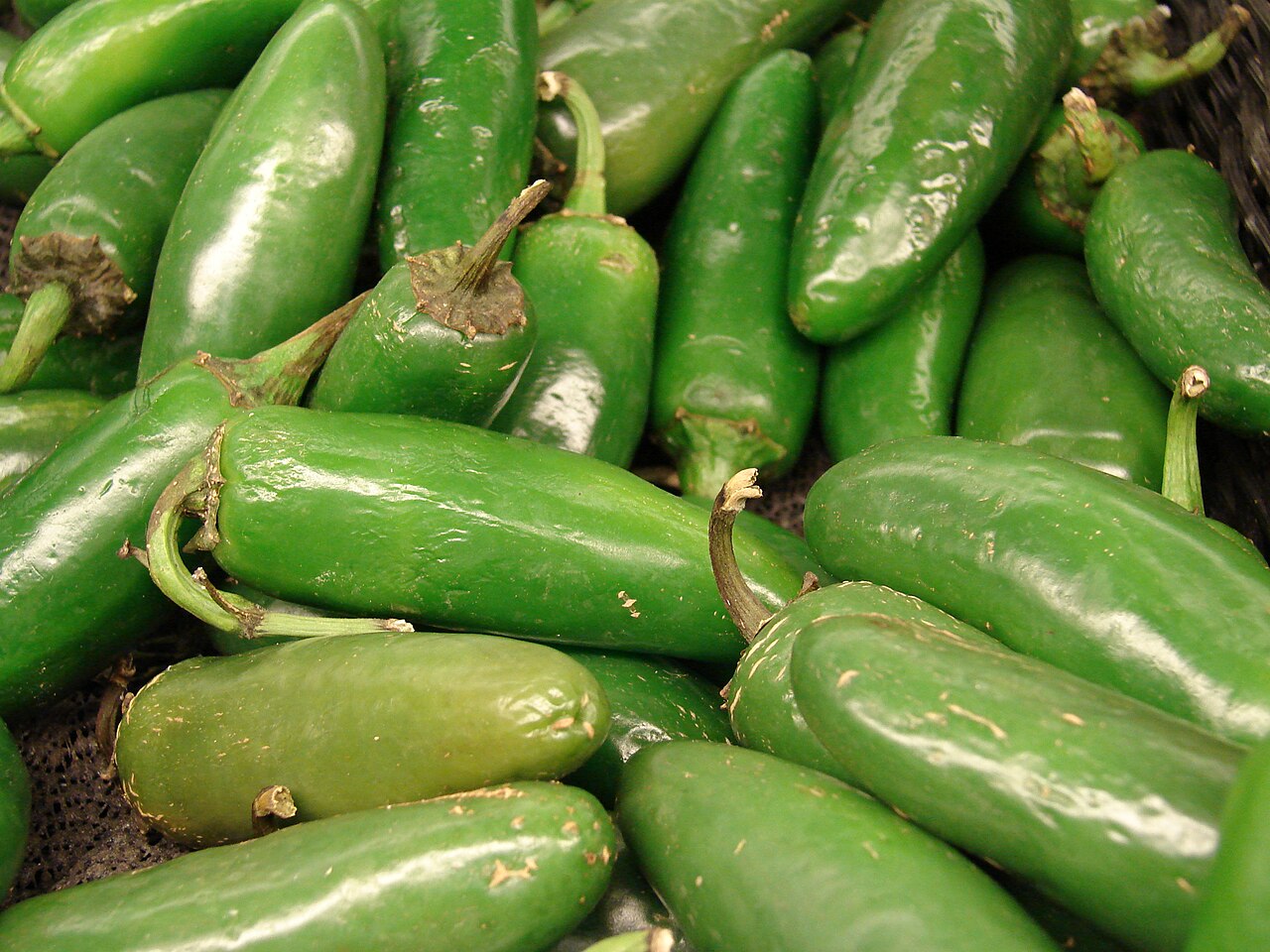
A jalapeño is a medium-sized chili pepper, a cultivar of Capsicum annuum, usually picked and eaten green. Utah State Extension describes jalapeños as about 2 inches long and suggests choosing firm, glossy peppers with taut, unwrinkled skin and fresh green stems.
Protect your hands and eyes
Wikipedia’s jalapeño article notes that fresh chili peppers can irritate the skin, eyes, lips or other membranes, so the handling matters as much as the cutting. North Dakota State University Extension advises wearing plastic or rubber gloves and not touching your face while handling or cutting hot peppers; if you do not wear gloves, wash your hands thoroughly with soap and water before touching your face or eyes. Utah State Extension gives the same advice: wear thin rubber gloves when possible, do not touch your nose, eyes or mouth after handling hot peppers, flush with water immediately if you do, and wash your hands with soap and water when you finish.
Wikipedia’s jalapeño article explains where the heat sits: capsaicin and related compounds are concentrated in the pale placental membrane around the seeds, which is why scraping out the seeds and veins lowers the heat. Utah State likewise suggests removing the seeds and veins to decrease the heat intensity.
Step by step
- Rinse. Utah State rinses peppers in cold running water when you are ready to use them, and scrubs them well if they have been waxed.
- Cut off the stem. Lay the pepper on the board and cut across just below the stem.
- Rings. For rings, keep the pepper whole and slice straight across at an even width. The seeds stay in the rings; knock out any you do not want, as our bell pepper guide does with its rings.
- Halve and seed. For strips or dice, cut the pepper in half lengthwise. Set each half skin-side down and scrape out the seeds and veins with a small spoon or the tip of the knife.
- Strips. Cut each half lengthwise into thin strips.
- Dice or mince. Line the strips up and cut across them. Utah State Extension’s knife-skills handout defines a small dice as ¼-inch cubes, a brunoise as tiny ⅛-inch cubes, and mince as chopping into very fine pieces.
The cuts and the heat
| Cut | How | Heat |
|---|---|---|
| Rings | Whole pepper, sliced across | Seeds and veins stay in unless you knock them out |
| Strips | Halved, seeded, cut lengthwise | Milder with seeds and veins removed |
| Dice or mince | Strips cut across | Milder with seeds and veins removed |
| Whole, with slits | Pricked or slit, added to a dish already cooking | A mild pepper flavor; the pepper is removed at the end |
That last row comes from Utah State, which suggests poking holes or cutting slits in a whole jalapeño, adding it to a dish that is already cooking, and taking it out when cooking is complete.
Keep your fingers clear
A jalapeño is small and slippery. Work from a cut half lying skin-side down, tuck the fingertips of your guiding hand toward your palm as Mississippi State Extension’s knife basics advise, and stop when a piece is too small to hold.
Storing jalapeños
Utah State suggests keeping jalapeños unwashed, wrapped in paper towels in the refrigerator, where they last up to 3 weeks.
The knife for this job
A jalapeño is a small, precise job, which suits a petty knife or a paring knife; our paring vs utility knife guide covers close control while coring and trimming. A santoku is handy when the peppers go into a larger batch of salsa with other vegetables. In our wa handle size guide, a 105–155mm petty takes the Compact handle and a 150–190mm santoku the Mid-size.
Sources: North Dakota State University Extension, FN1584 (gloves, face, hand washing); Utah State University Extension, Fruit and Vegetable Guide Series: Jalapeno (selection, rinsing, gloves, seeds and veins, slits, storage); Wikipedia, Jalapeño (cultivar, capsaicin in the placental membrane); Utah State University Extension, Knife Skills handout (dice, brunoise, mince); Mississippi State University Extension, Kitchen Knife Basics (curled fingertips).