To cut cabbage, remove loose outer leaves, rinse and dry the head, then cut it in half through the stem. For shreds or slices, cut each half into two quarters and remove the dense core; lay the quarters flat-side down and cut across. For wedges that need to stay together while cooking, cut through the stem into wedges and leave a small piece of core attached to each one. The core is useful in one cut and unwanted in another.
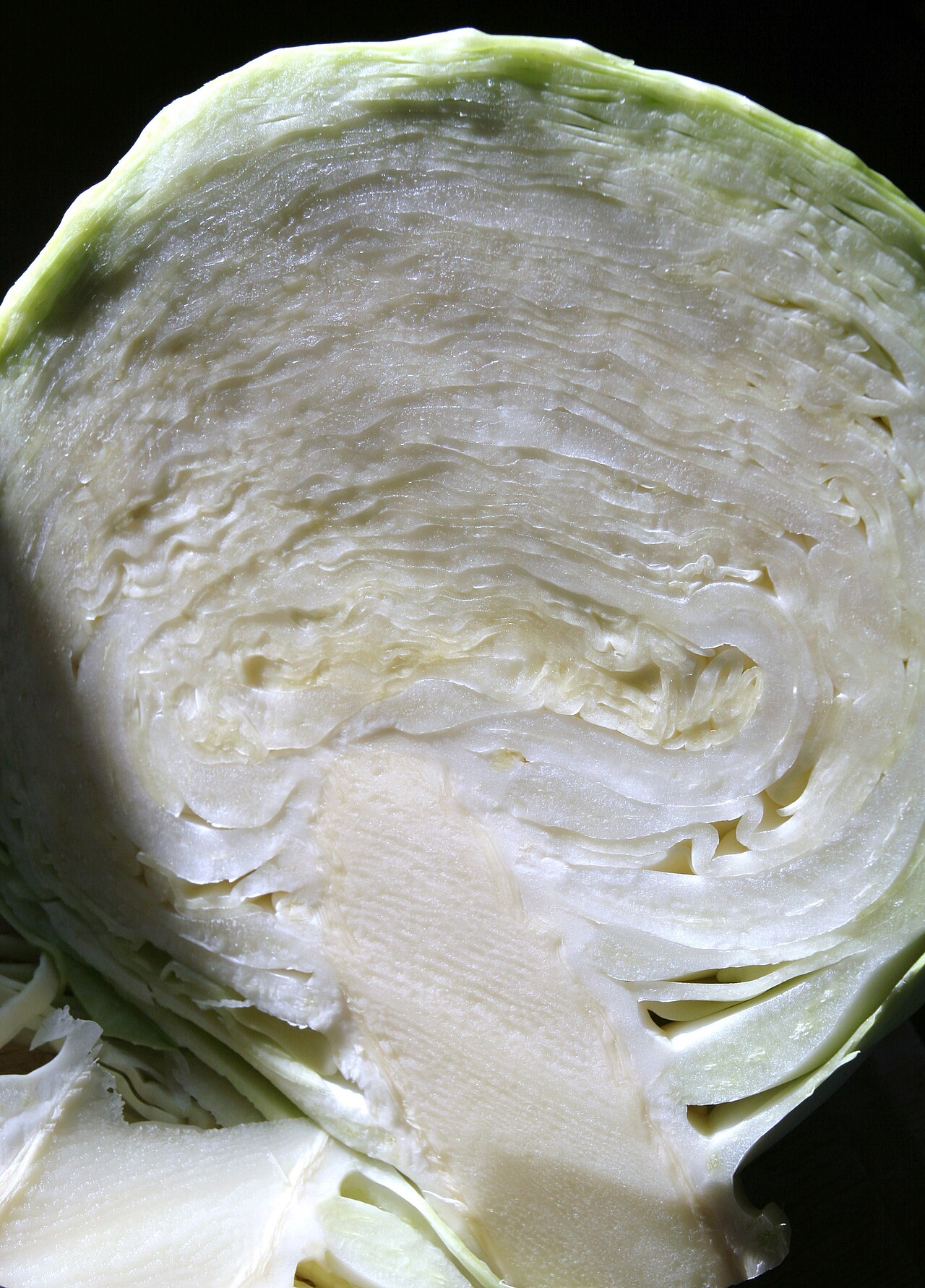
Set up a stable head
Use a large chef’s knife and a board with room for the head and cut pieces. Peel away outer leaves that are wilted, damaged or loose. Rinse the cabbage and dry its surface. Place it stem-end down and cut through the stem to divide it into halves. Purdue Extension’s cabbage guide uses the same half-first approach, then places the flat side down before slicing. If the head shifts, stop and make a larger flat face before proceeding.
For shreds or thin slices
- Quarter the halves. Put a half cut-side down and divide it through the stem into two quarters. Quarters are easier to hold securely than a rounded half.
- Remove the core. Set a quarter on its cut face. Cut a small diagonal wedge from the base to remove the firm triangular core. Keep fingers on the rounded outer side, away from the knife path.
- Slice across the leaves. Turn the quarter so it sits steadily. Cut crosswise from leafy top toward base in a consistent direction. Narrower spacing makes finer shreds; wider spacing makes broader ribbons. Do not reach for a slice while the blade is moving.
For fine slaw, cut one quarter at a time and stop when the remaining piece is too small to hold safely. Do not keep chasing tiny scraps; set them aside for another use. Transfer the shreds with a scraper or the knife’s spine-side area, with the edge turned away from your hand.
For wedges or larger pieces
To make wedges, halve the head through the stem, then cut each half into two or three wedges depending on its size and the serving you want. Leave enough core at the base to hold the leaves together; Escoffier’s Professional Cooking text describes trimming the bottom while leaving the core in wedges. If the recipe calls for loose chunks or sautéed cabbage, remove the core and separate the layers instead. This is why “remove the core” is not universal advice: a little core can keep a wedge intact, while shredded cabbage is easier to eat without it.
For broad ribbons, cut the quarter into wider strips. For rough chunks, make fewer crosscuts and separate the leaves by hand after the knife is clear. Keep the head flat-side down whenever possible, and use a steady stroke rather than forcing the edge through a thick stack.
Keep the knife path simple
Hold the cabbage with curled fingertips and the thumb tucked behind them; move the guiding hand back only after the knife clears each cut. Mississippi State Extension’s knife basics recommends a flat surface on round foods and curled fingertips. If the blade binds or cabbage rolls, pause and reset it; do not twist a knife trapped in food. A nakiri’s straight edge suits repeated board cuts, as explained in our nakiri-use guide. For Japanese recipe terms such as sengiri or rangiri, our vegetable-cutting reference covers those named shapes separately.
Refrigerate cut cabbage in a covered container and follow your recipe and food-safety guidance. At the board, keep the distinction clear: remove the core for loose slices; retain enough to keep a wedge together.