If a wooden cutting board rocks or slides while you work, stop cutting on it until it sits securely. First confirm the counter is flat and clean. If the board itself is cupped, the right next step depends on its maker and model: Steelmade publishes an air-exposure method for its Cover Board, while The Boardsmith gives different advice for its boards. If your maker gives no route—or the board has a deep crack or severe warp—ask about repair or replacement.
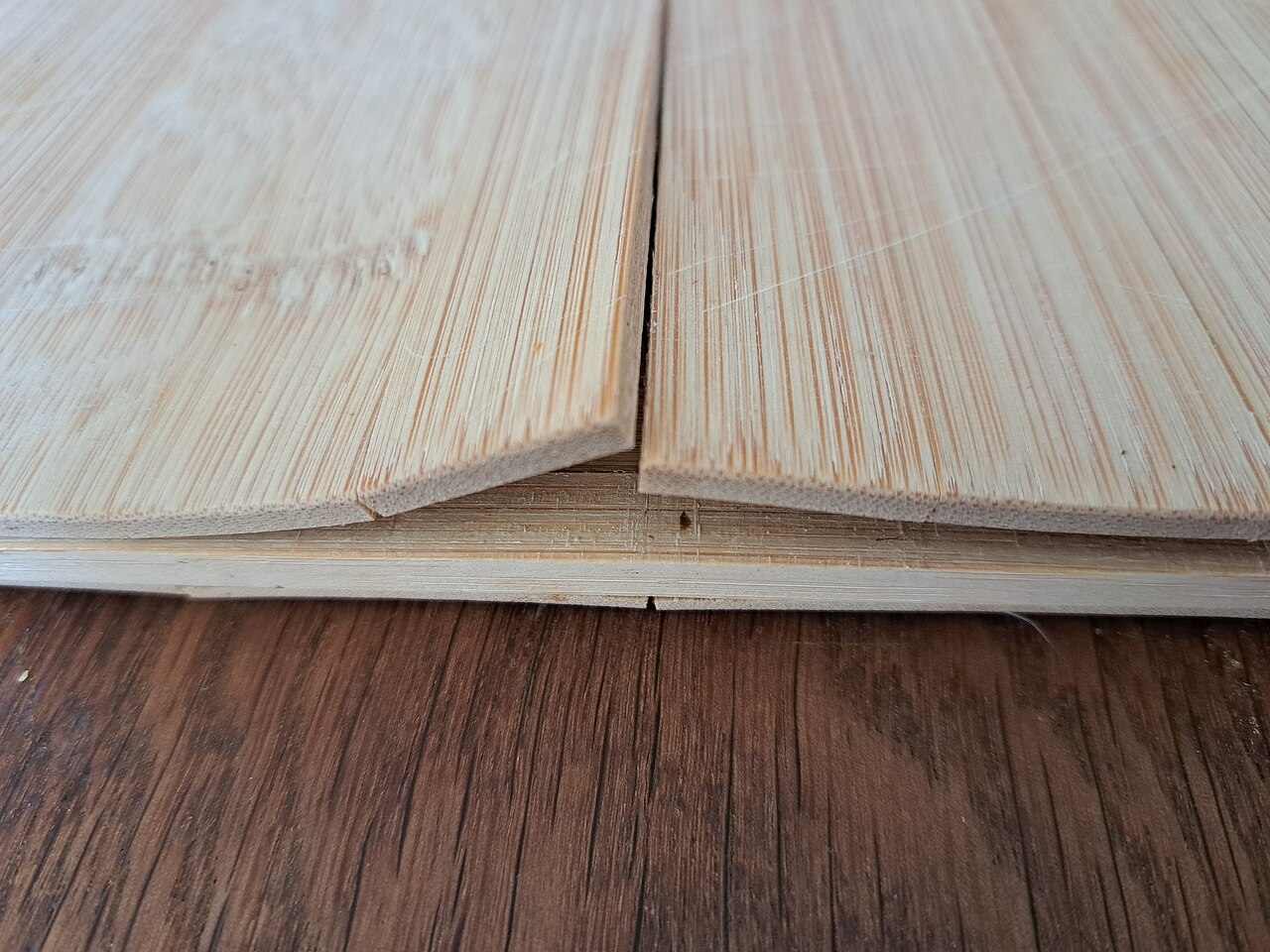
Check whether the board is actually unstable
Move the board to a clean, flat counter and check whether it rocks. A crumb, uneven work surface or loose nonslip mat can imitate a warped board. If the board still shifts, do not hold it in place with a hand while cutting. The Boardsmith warns that a board that slides or moves during cutting can create an accident risk; stop using it until it is stable.
Why wood can cup
Wood responds to moisture. Steelmade explains that a moisture difference between the two faces of its Cover Board can make the drier side shrink and pull the board into a curve. That is useful context for why a board may change after washing, storage or a move to a different climate. It does not tell you which treatment is suitable for every wood species, thickness, glue-up or finish.
Follow the instructions for your board
If you own Steelmade’s Cover Board, its instructions say to turn a cupped board over so the convex side faces up and its middle is raised from the counter, then leave it exposed to air until flat. Steelmade says severe cases may take a few days. This is the maker’s method for its Cover Board; do not transfer it to another board without that maker’s approval.
The Boardsmith’s page describes briefly wetting the concave side of its slightly warped boards, then drying them on edge. That is its product-care advice, not a transferable method. The difference is a reason to check your exact board’s instructions before applying water, heat, pressure, sanding or a plane. If the maker does not document a method for your model, contact its support with the board’s label, construction and a clear photo instead of experimenting.
Know when a board needs repair or replacement
A shallow movement that the maker says can settle is different from a deep crack or severe, persistent twist. The Boardsmith says severe warping that will not flatten is structural and should be repaired or replaced rather than treated as ordinary resurfacing. A crack that traps debris or prevents a stable cutting surface also calls for maker advice before the board goes back into food preparation.
Once the board is stable, follow its own maintenance instructions. John Boos recommends storing its wood boards on edge, away from direct sunlight and with airflow to help prevent warping. Oiling is a separate care step: it does not flatten an unstable board. Our wooden cutting-board oiling guide explains how to check whether a board should receive oil and how to wipe away excess.
There is no one correction that fits every wooden board. Check the surface, stop using a board that moves, and let the maker’s product-specific instructions set the next step.