If a knife seems sharp just after sharpening but loses its bite quickly, a remaining burr or wire edge is one possible cause. The thin lip can catch during an early cut, then fold or break away. But the same complaint can come from an edge that was never sharpened along its full length, visible damage, or ordinary wear. Start by checking the pattern rather than assuming the burr is the answer.
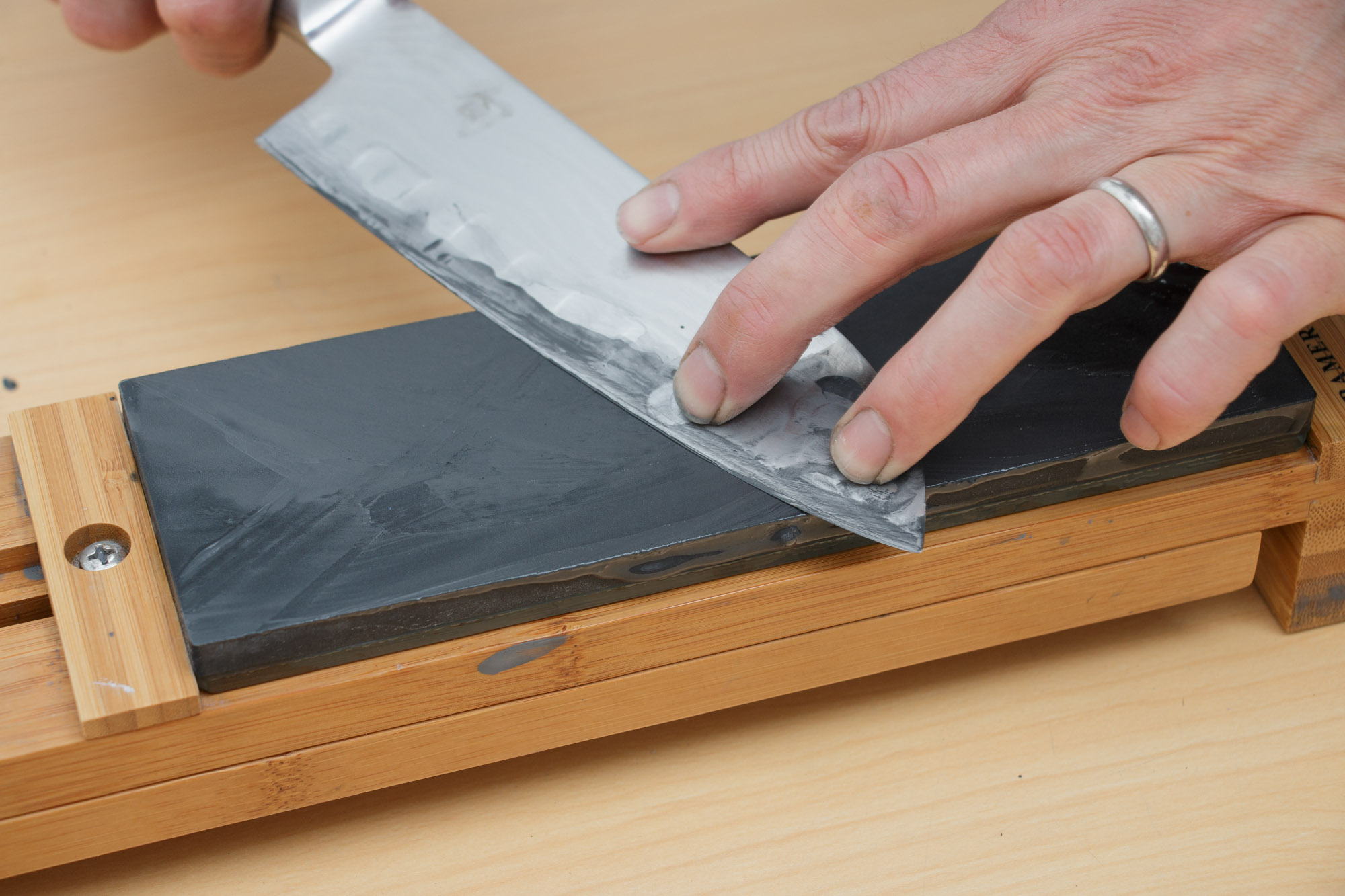
Look for a change along the edge
With the knife resting securely and the edge pointed away, inspect it under a bright light. A bright reflection at one section can show that the edge is not meeting cleanly there. A burr can be too small to see, so the absence of a visible line does not prove it is gone. Do not run a finger along the edge or press it against a nail. For a safe comparison of common checks, see a comparison of safe kitchen-knife checks.
If the knife works for a few cuts and then suddenly tears where it had been slicing, a fragile burr is plausible. If one section never cut well, return to the sharpening contact check: the stone may not have reached that part of the edge. The sharpening-angle guide explains how to keep contact consistent.
Use the existing deburring method carefully
After the edge is apexed, reduce pressure and use controlled, light alternating strokes on the stone. The stropping guide explains when stropping can help and why it is optional. More strokes are not automatically better: heavy pressure can make the burr larger or move it from side to side.
Use ordinary paper or a stable food item as a cautious cutting check, with the board secure and fingers clear. Avoid testing against skin, nails, or improvised hard materials. If the knife has a chip, crack, or damage near the edge, stop rather than repeatedly abrading it.
If the edge still fails
Grit is not a burr diagnosis: coarse and fine abrasives leave different finishes, but neither alone proves why the edge feels different. If only one ingredient or cutting motion feels dull, repeat a controlled cut on similar food before changing the stone or assuming the edge failed.
A repeatable rapid loss of bite after careful deburring may have another cause. The edge could be incompletely apexed, damaged, or unsuitable for the way it is being used. A hard cutting surface or lateral twisting can also harm a fine edge. Do not infer steel quality, hardness or a guaranteed sharpening life from this symptom.
Work Sharp’s official whetstone guide describes a burr as part of its sharpening sequence and addresses its removal; that is useful terminology, not proof that every quickly dulling knife has a wire edge (manufacturer manual). If the problem returns, a qualified sharpener can inspect the edge and distinguish incomplete sharpening from damage or geometry.
The kitchen tools guide links to the site’s basic sharpening references.