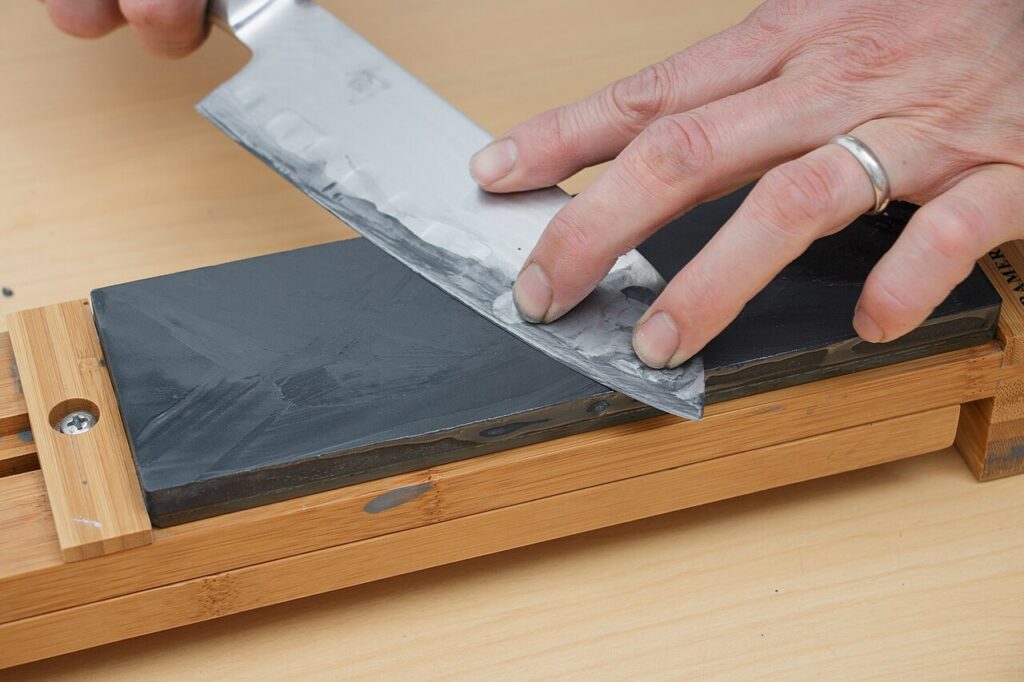
If you cannot detect a burr, first check whether the stone is reaching the very edge. More pressure is not the first fix. The stone may be moving, uneven, too dry for its instructions, or contacting the shoulder of the bevel instead of the apex. A very small burr can also be difficult to feel.
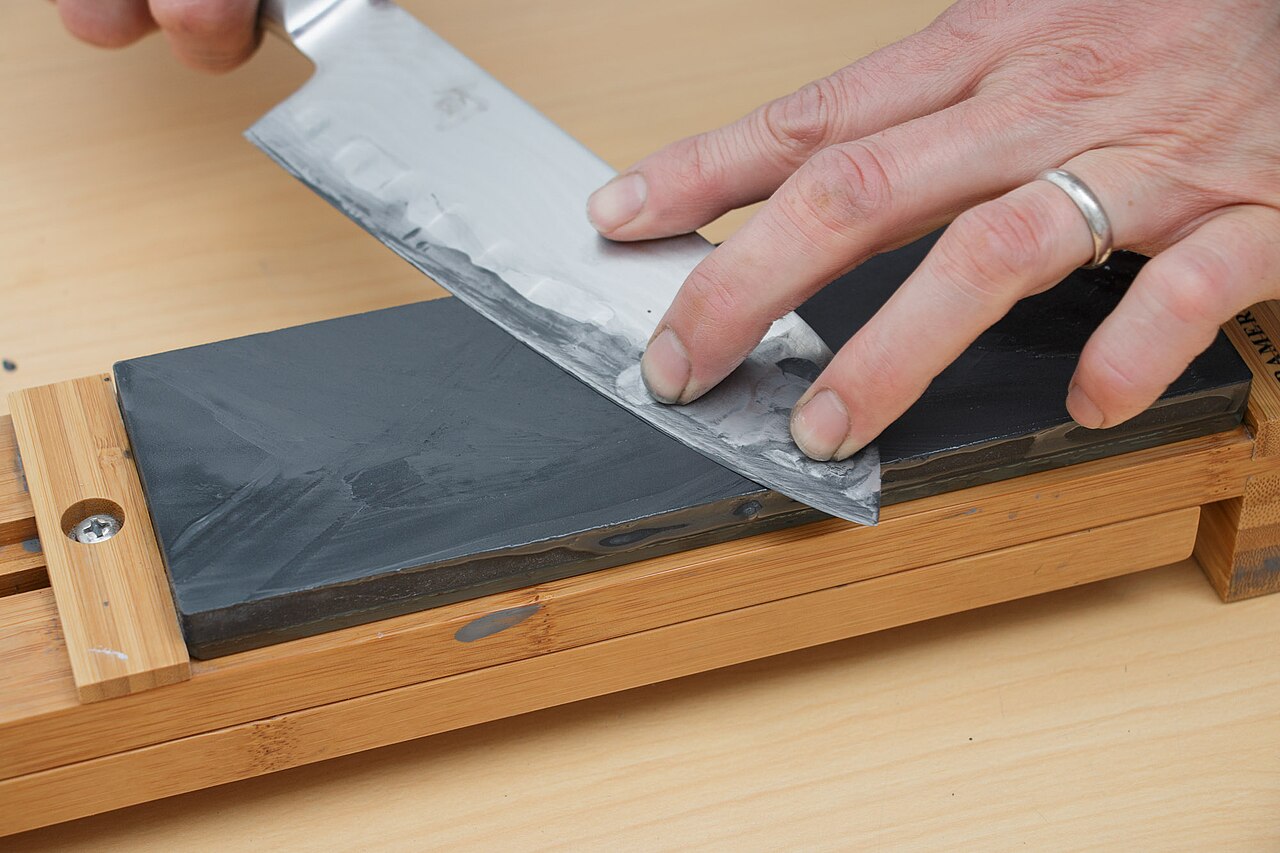
Make the setup stable
Secure the stone on a flat work surface. Follow the stone maker’s water instructions; not every stone should be soaked. If the surface is deeply hollow, glazed, dirty or damaged, it may not make even contact. The first whetstone setup guide covers a simple stable arrangement.
Check where the abrasive is touching
On a double-bevel knife, if its maker permits marking the finish, color the existing bevel with a marker and make one or two light strokes. Read where the ink is removed: if the shoulder ink disappears but ink remains at the apex, your angle is too low to reach the edge; raise the spine slightly to match the existing bevel. If the apex ink disappears but ink remains on the upper bevel, the angle is too steep; lower it slightly. Ink removed across the bevel suggests contact along it. This checks contact, not sharpness. Work Sharp describes the same marker check for matching a bevel; follow the knife and stone makers if their instructions differ (manufacturer guide). The sharpening-angle guide explains how to hold contact consistently.
Move the blade so the heel, middle and tip each contact the stone. A rounded belly or a heel that does not lie flat can make one section easy to sharpen and another hard to reach. Keep the knife controlled and the stone still.
Do not make the burr bigger just to feel it
A burr is a tiny lip of metal formed when sharpening reaches the edge. Work Sharp’s whetstone manual uses burr formation as a cue to change sides, but its instructions describe that product and are not a universal stroke count or angle recipe (manufacturer guide). Do not slide a finger along the edge, scrape it on a fingernail, or try to feel it with the edge pointed toward you.
Use reflected light with the edge pointed away. A bright line at the edge can indicate that a section is not yet apexed, but lighting and blade polish affect what you see. Marker removal alone does not prove that the edge is fully apexed or that a burr has formed. If the knife still does not cut well, recheck contact along heel, middle and tip, then inspect the stone surface and your stroke before changing grit or adding pressure.
Pause before changing the knife
If the knife has a single bevel, a chip, or unusual geometry, stop and use instructions from its maker or a qualified sharpener. If the marker shows the stone is not reaching the edge, adjust your angle in small, deliberate amounts and repeat the contact check instead of adding force. Do not switch to a coarse stone merely to make a larger or easier-to-feel burr. Choose grit for the actual edge condition, and remove only as much metal as needed.
The kitchen tools guide links to the site’s broader sharpening references.