Thin, moist slices can cling because a broad part of the blade face contacts the fresh cut surface. A slice that rides up after the cut is different from a blade that slows or wedges while cutting. Try a gentle draw-slice, cut a smaller batch, and use a bench scraper for loose food on the board. No blade finish guarantees that food will release. For a focused comparison, see see how to gather loose food with a bench scraper.
If you are unsure whether a slice is clinging after a smooth cut or the blade is wedging, use the Knife Problem Finder to choose the next guide.
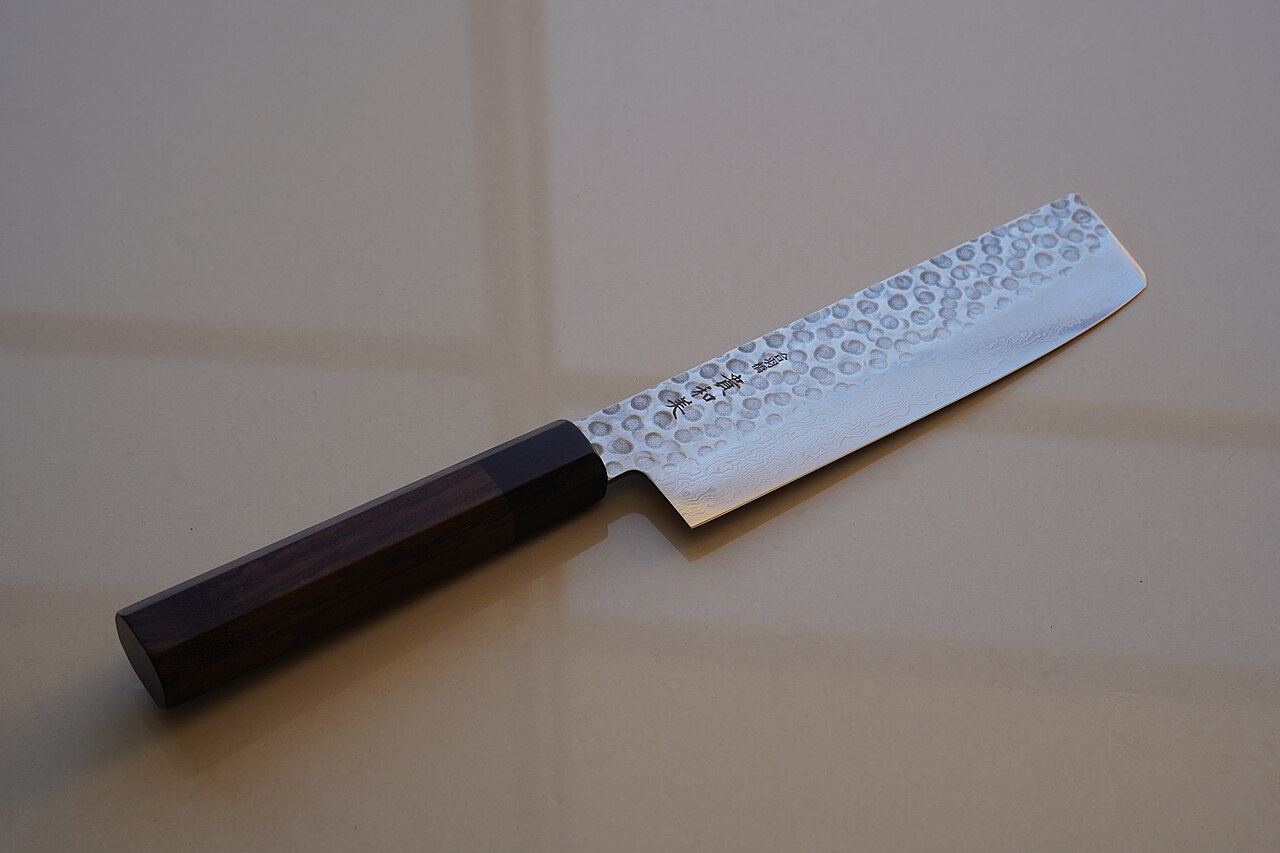
First separate cling from wedging
If the knife moves through the ingredient cleanly but the slice stays on its side, you are seeing a release problem. If the blade slows inside a carrot or potato and pushes the cut sides apart, that is wedging. The two can happen together, but sharpening alone may not change how a slice behaves against the blade face.
Try low-risk changes
- Make a gentle slicing motion instead of lifting straight up after each cut.
- Cut a smaller amount at once so slices have room to fall away.
- For a loose pile on the board, use a bench scraper rather than sweeping with the knife edge.
- If a slice is stuck, set the knife flat on the board with its point away from you. Keep your hands clear and use a separate utensil to move the slice across the blade face toward the spine, away from the sharpened edge.
If the slices release more readily after a motion change, keep that technique. If they still cling, the contact between the cut surface and the blade face may simply suit that food and cut. Some blade profiles and surface features are designed to alter contact, but their effect varies with ingredient, slice thickness and movement.
The knife anatomy guide gives context on blade faces and cross-sections. A new knife or a coating is not the first step for an occasional sticking slice.
Research note
Food-slicing research studies friction and blade contact under controlled conditions, including how a slicing motion changes the cut. It supports treating motion and geometry as interacting factors; it does not establish one finish or feature as a universal anti-stick fix (food-slicing review).