Choose a small suribachi for a little sesame or condiment, and a larger household bowl if you want to grind a dressing and mix the vegetables in it too. In use, keep the bowl steady and move the wooden pestle around its grooved interior. The useful action is sustained contact between food, pestle and ridges, rather than repeated heavy blows straight down.
A suribachi is the ceramic mortar; a surikogi is its wooden pestle. Together they make a simple tool for turning whole ingredients into a texture you can watch and adjust. The right size depends on what will be in the bowl at the end, not only what goes into it first. For a focused comparison, see compare the suribachi with other mortar forms.
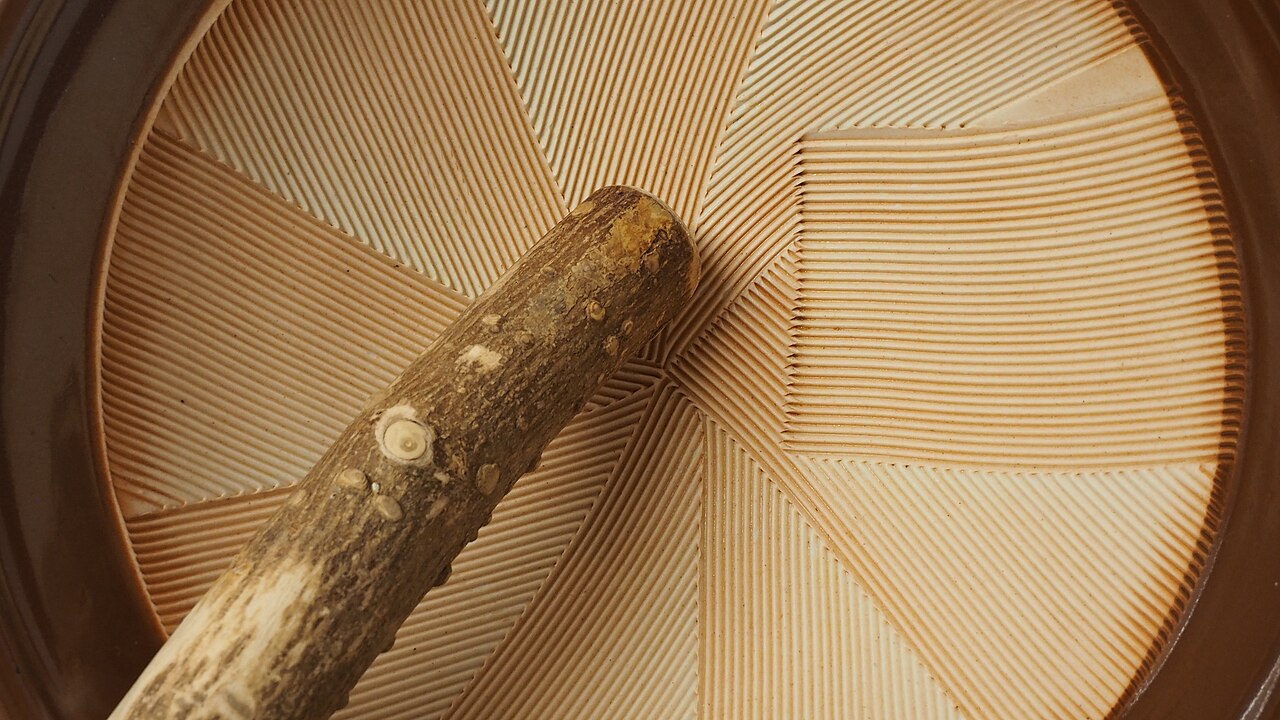
What the grooves do
The bowl’s interior provides the rough working surface. Kikkoman’s grinding guide describes fine ridges arranged across ceramic suribachi and documents their use for sesame, tofu, sticky yam and fish. The pestle presses and moves the food against those ridges.
That explains why a bowl with a smooth decorative interior is a different object. It may be the right vessel for serving, but the grooves are part of the grinding tool. They also explain why cleanup requires attention: the places that grip ingredients during preparation can retain food afterward.
Do not assume every suribachi has an identical surface. Groove patterns, bowl shape and finish vary. Choose a maker that explains the intended use, and check whether the pestle is supplied or needs to be purchased separately.
Size for the finished task
For a spoonful of ground sesame, a compact bowl is easy to accommodate. For dressed vegetables, room to turn and combine the food becomes more important. If you want to carry the finished dish to the table in the same bowl, include that in the choice before buying.
OUJIGAMA, a Seto mortar maker, gives these examples for its own range:
| Approximate diameter | Example task |
|---|---|
| 11–12 cm | Small amounts of sesame, ginger or condiment |
| 15–18 cm | Nuts, dressed vegetables or potato salad |
| 22 cm | Family portions of mashed or dressed vegetables |
| 26–28 cm | Larger quantities, including tossing and serving pasta |
Traditional size labels may use sun, a unit of about 3 cm, but use the actual listed diameter rather than calculating a product’s exact size from its label. OUJIGAMA presents its sizes as examples, not a universal portion chart.
For a first bowl, write down the dish you expect to make most often. “Sesame for topping noodles” and “sesame dressing mixed with a family’s spinach” may begin with the same ingredient but ask for different amounts of working room. Compare that task with the space available for washing, drying and storing the bowl.
Stabilize the bowl and learn the turning motion
Put the suribachi on a flat surface with a suitable mat or folded towel underneath. Zojirushi’s use guide recommends this for stability, then describes holding the surikogi with both hands, one higher and one lower, while turning it around the mortar.
Begin with a manageable amount of food. Move the pestle so the ingredients meet the rough interior; there is little benefit in pushing food around above the grooves. Pause to inspect the result and bring ingredients back into the working area when necessary.
The useful feedback is visible. Whole sesame seeds become broken pieces and a finer mixture; a dressing can retain texture if you stop earlier. You do not need to chase a perfectly smooth paste unless the dish calls for one. A suribachi lets you stop, look and continue without committing the whole batch to a fixed machine cycle.
If the bowl starts sliding, fix the support before applying more force. If seeds escape, reduce the amount and slow the motion. A bigger swing is not automatically a more effective grind.
Try the complete sesame-dressing workflow
Goma-ae is a helpful first use because the grinding and mixing can happen in one vessel. Kikkoman describes a sesame dressing made by combining freshly ground sesame with seasonings, then using it on blanched greens.
Prepare the vegetables and seasoning quantities from your chosen recipe before starting. Put the sesame in the steady bowl and work it with the turning motion. Stop to check the texture; some dishes want a coarse result rather than sesame reduced completely to paste.
For a concrete example, Kikkoman’s komatsuna recipe uses roasted sesame that is only partly ground. The seasonings are mixed into it, followed by greens that have been blanched, cooled, drained and squeezed. Follow that recipe for its quantities and food preparation.
Once the dressing is mixed, combine it with the prepared vegetables. This final mixing stage is the reason to choose enough bowl capacity at the start. If your mortar is a small condiment size, make the dressing there and transfer it to a larger bowl for combining. You do not need to force the whole dish into the grinding vessel.
Use the texture you want as the stopping point
Different ingredients ask for different results. Sesame dressing may retain pieces; tofu can be worked into a paste. Kikkoman describes sticky yam being rubbed against the grooves before further grinding with the pestle. Those are distinct methods, not instructions to treat every ingredient as a handful of dry seeds.
For a familiar recipe, compare the mixture with the result you want on the plate. If it needs more grinding, continue in short stages. If it is ready, stop. The ability to make that decision by hand is part of the tool’s appeal.
A suribachi need not replace every grinder in the kitchen. It is most useful when the quantities, texture and hands-on preparation suit the dish. A large batch with a very smooth target may be a different job.
Clean the working surface, then let it dry
OUJIGAMA advises brushing food out of its bowls’ grooves, rinsing well and drying fully before storage. It warns against metal scourers and hard brushes that could damage the ridges. Follow the instructions for your own bowl and pestle, especially if their materials or finishes differ.
Inspect the grooves rather than judging cleanliness only from the glazed rim. If residue remains in the working surface, deal with it before storing the bowl. Keep the pestle’s care separate from assumptions about the ceramic vessel.
The best size is the one that makes both cooking and cleanup comfortable. Our kitchen tools guide explains why that practical routine matters as much as the tool’s appearance. If you are choosing a mortar for pesto, see our pesto mortar guide.