Dark end grain may be a long-standing feature or a new surface change. Colour alone cannot establish retained moisture, contamination, decay or internal damage—and it does not determine whether a handle should be refitted. The useful first step is to establish whether the patch is new, persistent and accompanied by another change.
Create a comparison rather than a diagnosis
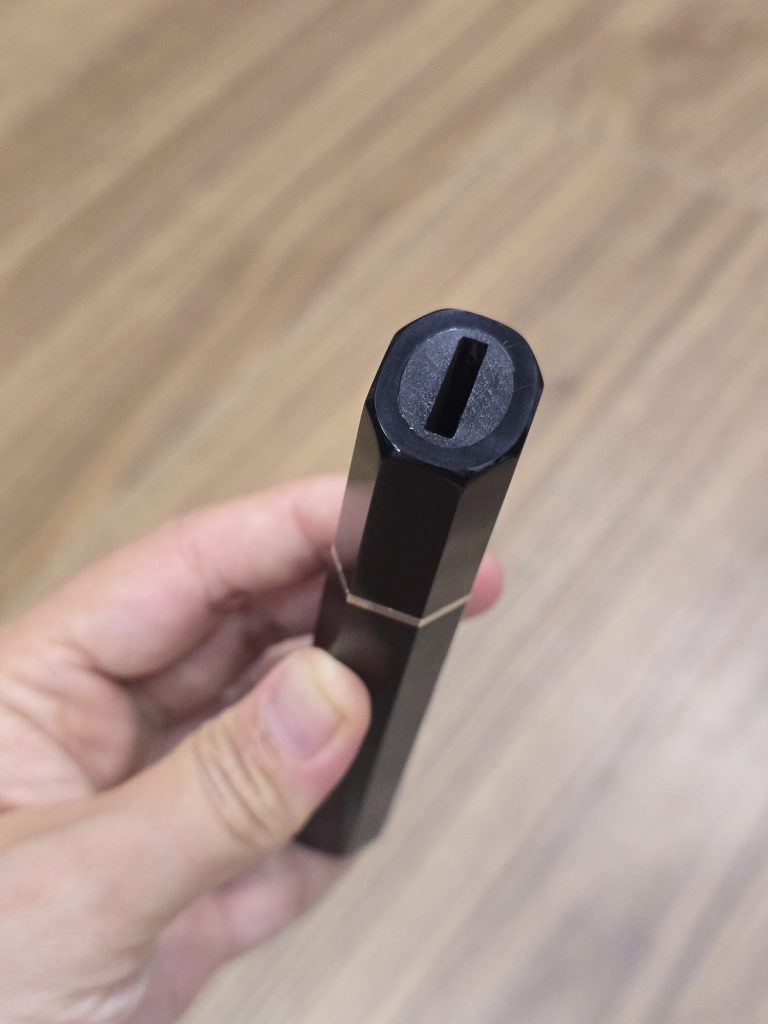
Photograph the clean, dry handle in neutral, even light. Include one full-handle view and a close view showing the dark area’s boundary and its position relative to the ferrule, butt and seams. Compare these with older photographs if available.
Write down the recent history that a picture cannot show:
- Whether the colour appeared suddenly or has remained unchanged over time.
- Recent washing, prolonged wetting, humid storage or heat exposure.
- Cleaners, oils or other products recently applied.
- Whether ordinary finish-compatible cleaning and complete drying changed the appearance.
- Any accompanying roughness, raised grain, crack, joint movement or persistent odour.
Wood naturally exchanges moisture with its surroundings. The USDA Forest Products Laboratory’s chapter on wood moisture identifies humidity, temperature and existing wood moisture as relevant factors, but it supplies no universal drying time or visual test for internal condition. Its separate finishing chapter also ties finish selection to wood properties, protection and cleanability, so an unknown surface should not be treated with an assumed product.
Decide from change, not colour alone
A patch documented as long-standing and unchanged, with stable texture and fit, can remain part of the comparison record. That history is useful, but it does not certify the wood’s condition. A new mark that persists after compatible cleaning and thorough drying deserves closer assessment when it appears with texture change, cracking, movement or a changing joint.
Do not use bleach, acid, sanding or another aggressive treatment to discover what the patch is. A cleaner-looking surface would not prove disinfection, while removed wood or finish could erase useful evidence. Japanese Knife Imports supports hand washing, prompt drying and avoiding prolonged water and heat exposure; detailed drying guidance is available in how to dry a handle after washing.
Refitting becomes relevant when the assembly’s fit has changed, not merely because exposed grain looks darker. Keep the record, avoid further experimental products and use the wa-handle care guide for compatible routine care while the condition is assessed.