Koa contributes warm, varied colour and potentially striking curly grain to a wa handle. What it cannot contribute is proof of fit: a dramatic name or photograph says nothing definite about the finished handle’s dimensions, balance, preparation or figure on every face.
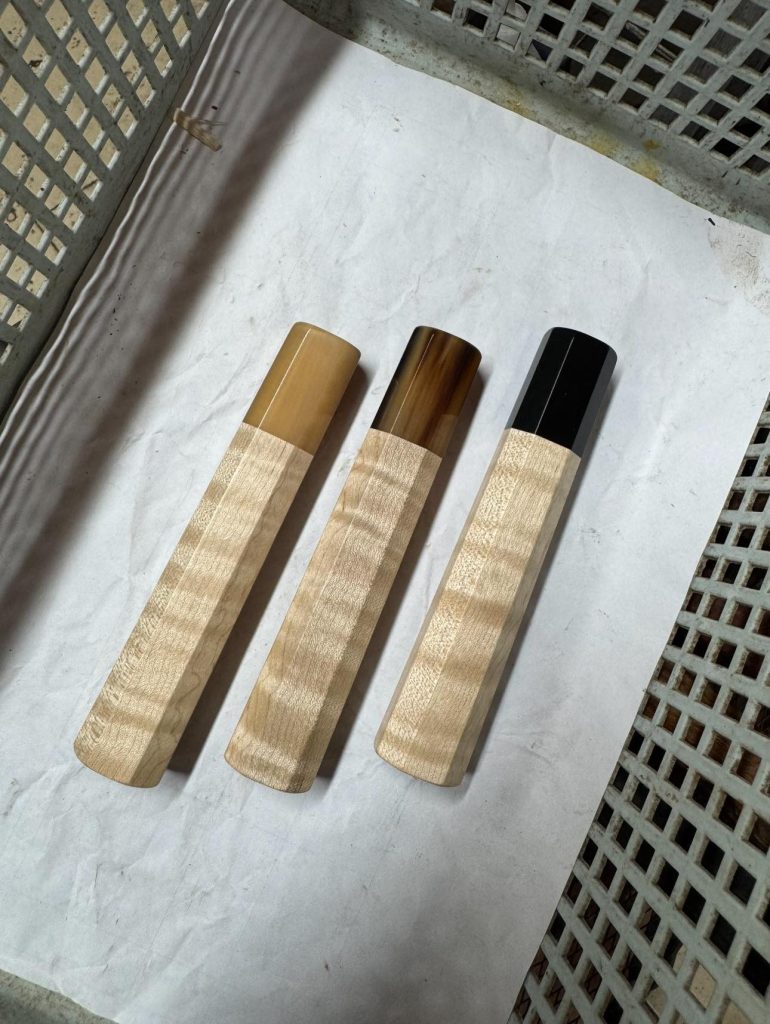
Colour and figure vary by piece
The USDA Forest Service’s koa profile describes heartwood ranging through red, golden brown and brown, with curly grain occurring frequently. It also reports good working properties. “Frequently” is not “always,” however, and the source identifies koa as a Hawaiian species without establishing the origin or certification of any particular blank.
Judge the actual material rather than an ideal example. A photograph of one blank may show whether that face has appealing colour and movement, but it cannot promise equivalent curl after the blank is cut into an octagon. Images of the proposed blank and, where possible, its different faces provide more useful evidence than the species name alone.
Figure does not reveal preparation or feel
Visible grain cannot establish whether a blank was dried appropriately, stabilized, or given a particular finish. Those details should be stated separately. Ask what material and preparation are actually being offered, and remember that surface feel depends on shaping, sanding and finish as well as the wood beneath them.
Koa also cannot be ranked reliably against ebony, walnut or another wood without matched pieces. Finished balance depends on handle volume, the tang cavity, ferrule or end-cap mass, and the knife itself. A useful discussion therefore starts with the proposed proportions and whether the user wants to preserve or change the present balance—not an unsupported promise that koa will move it in a particular direction.
Fit remains the deciding constraint
If the current handle is secure, leave it installed. Visible height and thickness at the blade-handle junction can offer partial evidence, but they do not reveal the hidden tang. If the tang is already exposed, the three primary measurements should be taken in millimetres: usable length from the shoulder or seating line to the tip, height near the shoulder, and face-to-face thickness at that same station. The wa-handle size guide explains how proportions relate to fit.
Koa is not listed in Horn & Grain’s current published catalogue or configurator, so this is material guidance rather than an availability claim. The current wood guide shows the offered alternatives. Whatever the final wood, hand-wash or wipe it, dry it promptly, avoid soaking and dishwashers, and follow care appropriate to the stated finish.