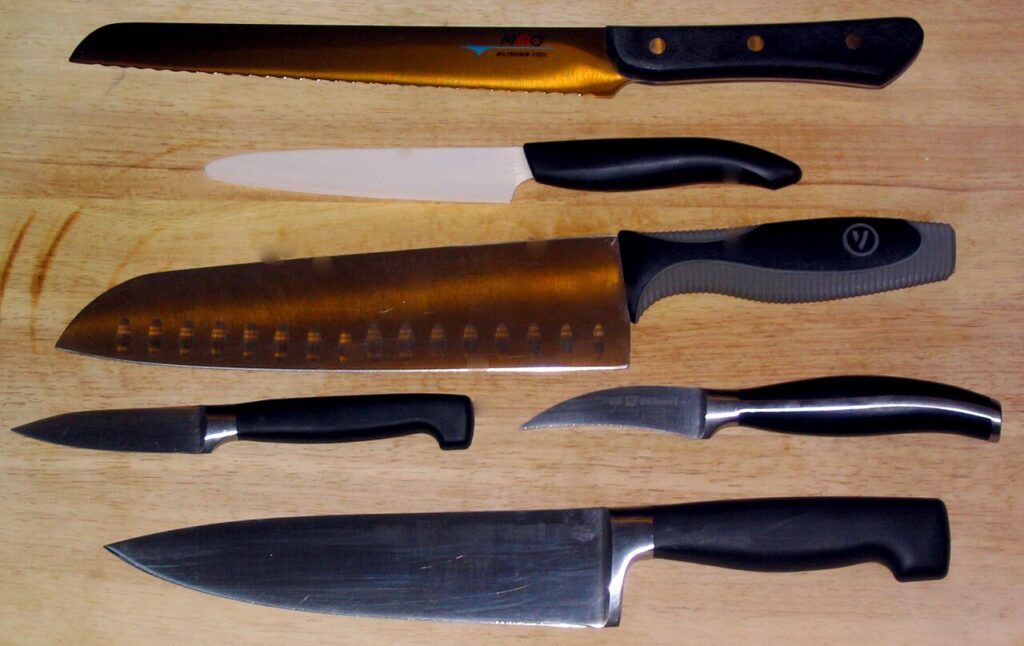
A knife set makes sense when most of its included pieces fill jobs you do and you have room for its storage. Buying individual knives is often a better fit when you already own a useful chef’s knife, need one missing tool, or do not want duplicates. Compare the exact contents—not the “piece” count—before deciding. For an occasional holiday bird, a sharp chef’s knife already in the kitchen can carve it; follow our step-by-step turkey carving guide before buying a dedicated knife for a once-a-year task.
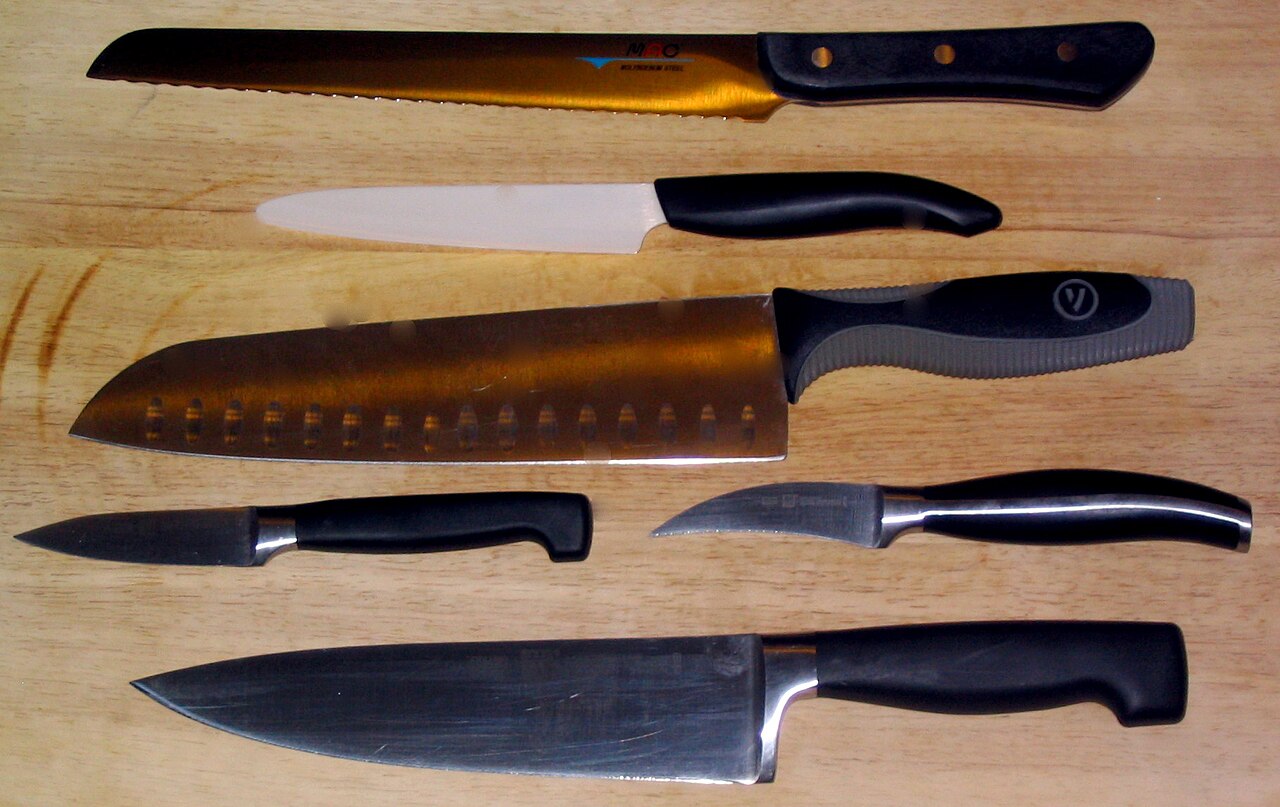
What “six-piece set” can mean
Piece counts do not always mean the same thing. For example, WÜSTHOF’s Classic 6-Piece Starter Set includes three knives (paring, serrated utility, and chef’s), a honing steel, kitchen shears, and a block. Its Gourmet 6-Piece Set includes four knives (peeling, utility, chef’s, and bread), a honing steel, and a block. The same headline count describes different mixes of knives and accessories.
Fill in this inventory before shopping
| Job | What you already use | What a set may add |
|---|---|---|
| Everyday prep | Chef’s knife or santoku; note size and comfort. | A second generalist may duplicate a job unless you need a different size. |
| Small fruit and detail work | Paring or utility knife, if used regularly. | Check length, tip shape, and whether the piece fills a real gap. |
| Bread and crusty foods | Bread knife, if you bake or buy whole loaves. | Look for the edge style and length you actually need. |
| Sharpening, cutting, and storage | Board, honing/sharpening tools, and safe storage. | Some packages include a steel, shears, or a block; these count as pieces but are not knives. |
Write “already own,” “use weekly,” “occasionally,” or “would not use” next to each set item. A set earns its space when the included tools cover your regular cooking without leaving several pieces untouched. If you need only one different blade, the individual option avoids paying for and storing duplicates.
Compare the real footprint
A block is useful only if it fits the counter or drawer where you can keep it safely. Check the maker’s listed block dimensions, number of slots, and whether the set uses an integrated sharpener. A large slot count is not a reason to fill every slot; unused pieces still occupy room and need care.
Compare the actual models included in a set with individual options: handle feel, blade length, care guidance, service, and whether replacement pieces are available. Prices and bundles change, so use current maker listings when comparing cost rather than relying on an old “value” claim.
Buying a first knife is a different decision
If you are choosing your first Japanese kitchen knife, start with one generalist sized for your board and routine; our first Japanese knife guide covers that choice. This page answers the next question: whether a bundle of additional tools fits the jobs and storage you already have. The right set is the one whose contents you will reach for, not the one with the biggest count.