If a baking recipe gives ingredient weights, use a kitchen scale and follow those gram amounts. If it gives only cups, use that recipe author’s cup-measuring method and any chart they supply. The choice is not scale for every recipe: a scale makes weights repeatable, while cups work when measured as the recipe expects. A cup of flour does not have one universal gram value across ingredients and recipe developers.
Choose by what the recipe gives
| Recipe says | Best next step | Why |
|---|---|---|
| Grams or ounces by weight | Weigh that exact amount. | The recipe has specified a mass; no cup conversion is needed. |
| Cups only | Use that author’s cup method or weight chart. | Ingredient density and measuring technique change volume-to-weight conversions. |
| A very small amount | Check the scale’s display increments and recipe’s spoon measure. | Not every scale resolves tiny amounts the same way. |
Weigh several ingredients in one bowl
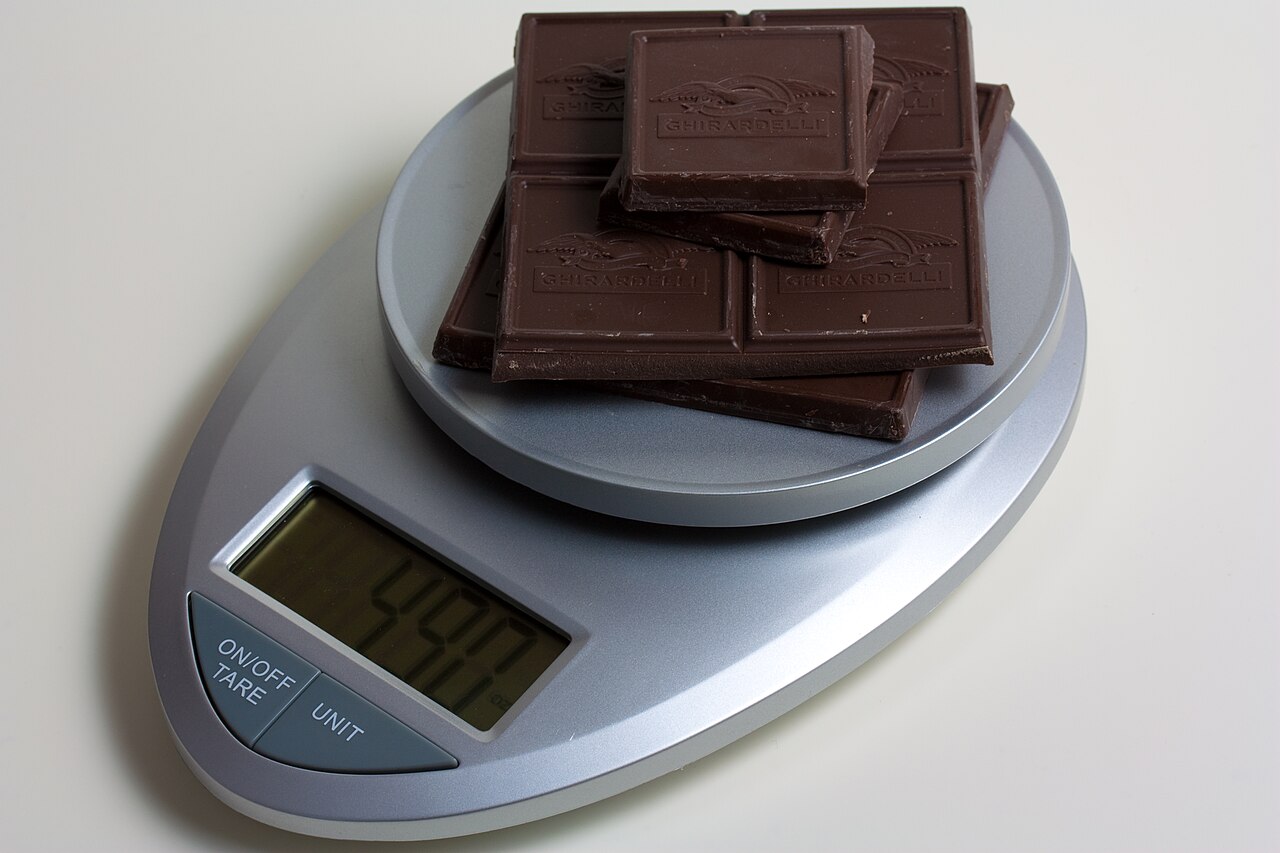
Set a mixing bowl on the scale and tare it to zero. Add the first ingredient until the display reaches the recipe’s weight. Press tare again before the next ingredient, then repeat. The bowl stays in place, and each new amount is measured from zero instead of added to the previous ingredient. If the scale switches between grams and ounces, check the unit display before you begin.
- Place an empty bowl on the scale.
- Press tare or zero and wait for the display to return to zero.
- Add the listed ingredient until it reaches the recipe amount.
- Tare again before adding the next ingredient to the same bowl.
A scale is especially useful for flour because it can compact in a cup. King Arthur Baking lists one cup of its all-purpose flour as 120 g, but that figure belongs to its own standard; use the conversion printed by the author of the recipe in front of you. Its ingredient chart lists different weights for different ingredients, which is why a single cup-to-gram rule is unreliable.
If you are measuring by cups
Use a dry measuring cup for dry ingredients and a liquid measuring cup for liquids when the recipe is written by volume. King Arthur Baking advises gently spooning dry ingredients into a dry cup and sweeping off excess. For liquid, fill to the line and read the level at eye height. Follow any more specific method given by the recipe developer, especially for flour.
Keep rice-cooker cups separate from ordinary baking measures. A cooker’s supplied cup is commonly 180 mL and is matched to the water lines in its inner pot; it is not a standard US baking cup. See the rice-cooker measuring-cup guide for that separate task.
If you bake from recipes that include grams, a basic scale with a tare function can simplify measuring and reduce dishes. If your recipes give cups only, keep the cups and follow those directions. Use measures that match the instructions rather than converting by guesswork.
Sources: King Arthur Baking’s flour-measuring method; its ingredient weight chart; and its recipe success guide.