Fresh herbs are not all prepared the same way. Tender basil leaves are usually separated from their stems; thyme leaves can be stripped with a downward stroke; and a rosemary sprig may flavor a dish whole, with the woody stem removed before serving. Rinse herbs just before cutting, dry them well and choose the method for the herb in your hand.
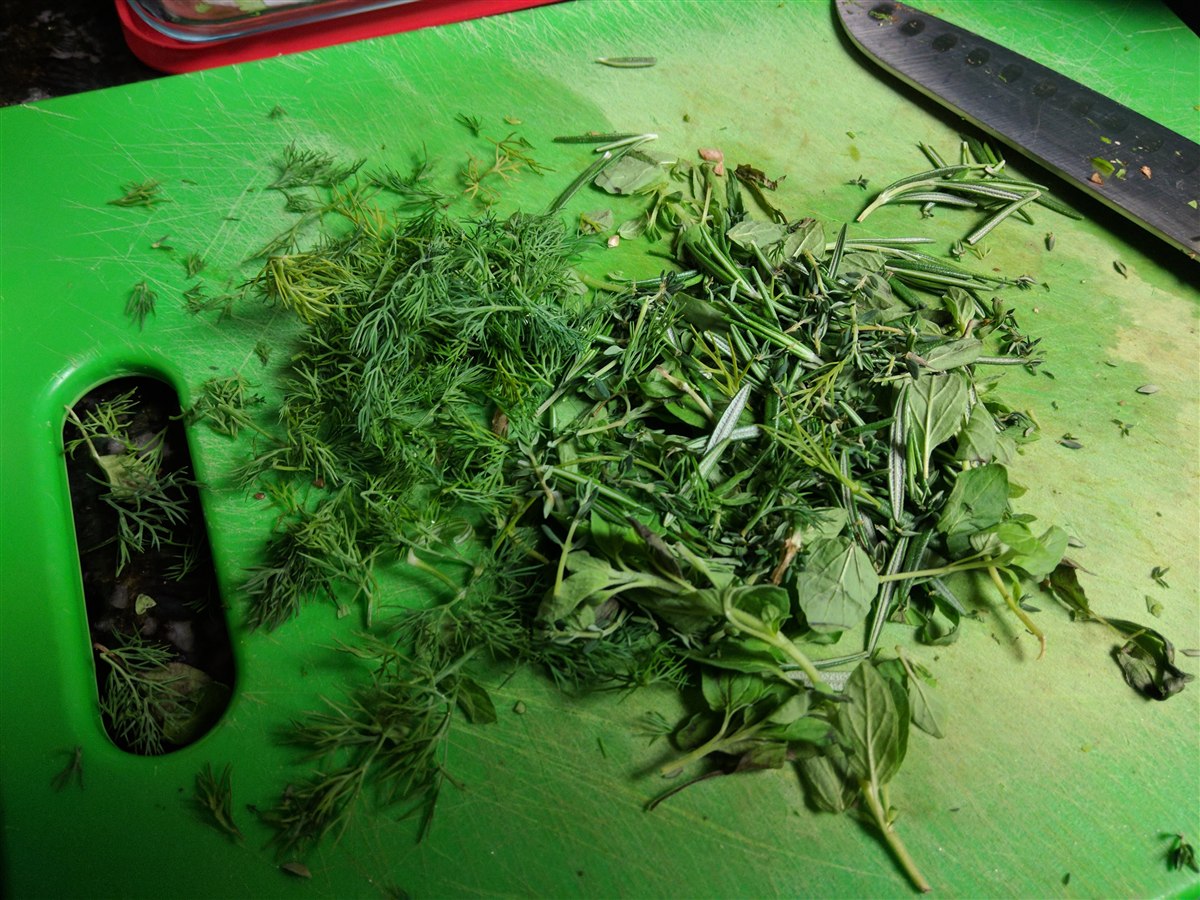
Start with a clean, dry bunch
Rinse fresh herbs gently under cool water and shake or pat them dry. Wet leaves can clump together and are harder to cut cleanly. Use a stable board and a sharp knife. For leafy herbs, gather a small bunch loosely; keep the fingertips of the holding hand curled back and make controlled cuts.
Choose the right prep for each herb
- Basil: Pull leaves from the stems, then tear them for a casual finish or cut them to the size you need. For ribbons, stack a few dry leaves, roll them loosely, and slice across the roll; avoid compressing a large stack.
- Parsley: You can chop both leaves and tender stems, or use whole leaves. Gather a small bunch, make a few cuts, then draw the pieces together and chop again if you want them finer.
- Cilantro: The leaves and tender stems can both be used, or strip off leaves when you want a leaf-only finish. Chop a small bunch with a rocking motion while keeping the knife tip and holding hand controlled.
- Dill: Separate the feathery fronds by hand, snip them with clean kitchen scissors, or chop them. A big knife is unnecessary for a small amount.
- Thyme: Hold the stem near its tip and slide your fingers down toward the base to release the leaves. Discard the bare woody stem or save it to flavor a dish that will be strained.
- Rosemary: Pull your fingers down the stem to strip the leaves. Chop the leaves finely if you want them distributed through a dish. Or add a whole sprig for flavor and remove the stem before serving.
Keep the cuts light
Use a sharp edge and avoid pressing or crushing soft leaves into the board. If herbs stick to the blade, gather them with the blade’s spine or a bench scraper, keeping fingers away from the edge. Add cut herbs when your recipe calls for them; recipes differ on timing, especially for delicate leaves.
For safe grips, basic cut shapes and practice drills, see our beginner knife-skills guide.
Sources: Purdue Extension FoodLink guides for basil, cilantro, dill, parsley, rosemary and thyme (species-specific washing and preparation steps).