To cut a mango safely, remove the two broad cheeks beside its flat central pit, then slice or dice the flesh while it is still attached to the skin. The pit is wide and thin, so cutting straight down the fruit’s centre usually meets it. Wash and dry the mango first; a dry fruit is easier to steady on the board. For another pit fruit, see our how to slice or dice an avocado.
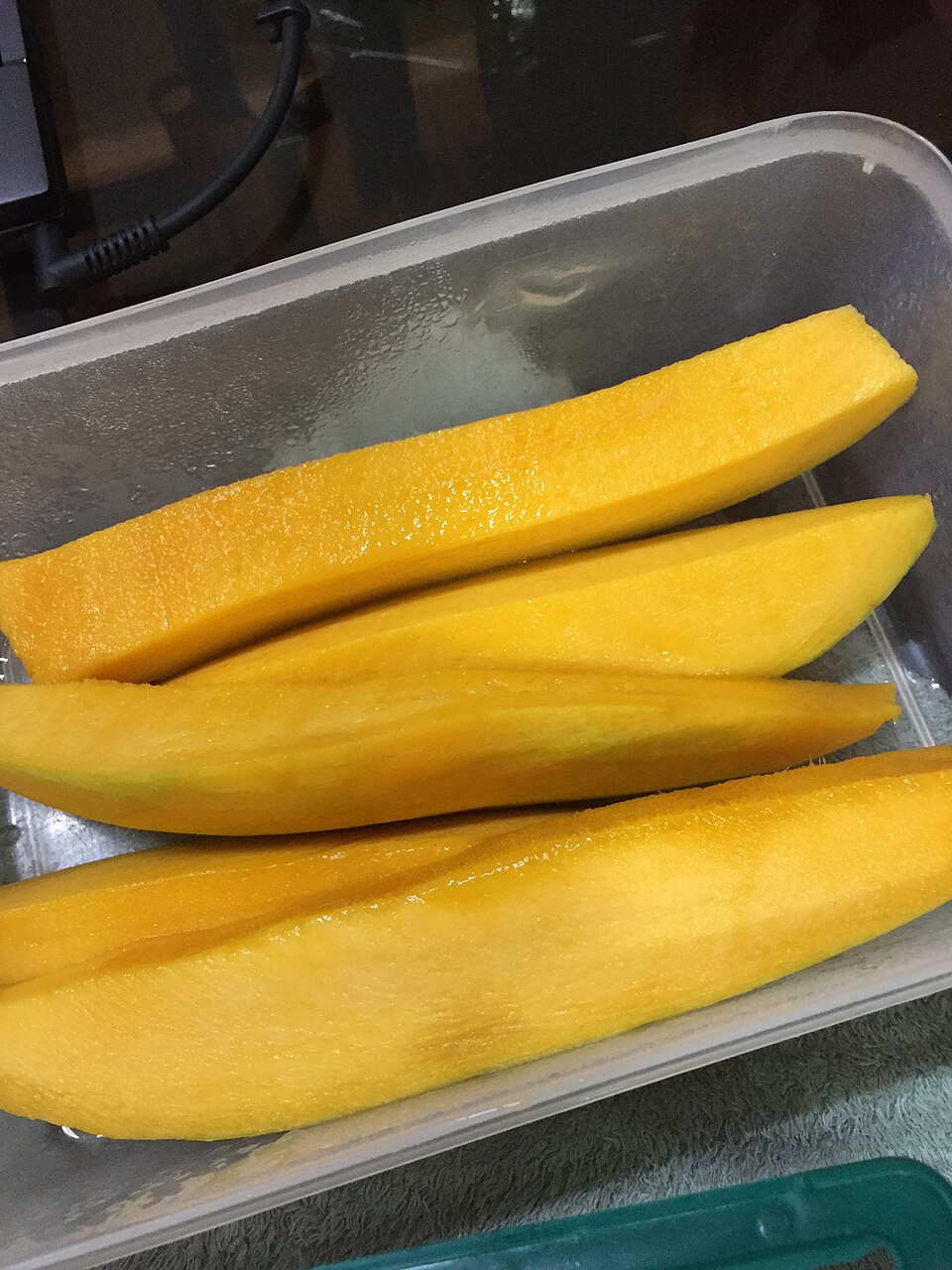
Cut the cheeks from the pit
- Rinse and dry the mango. Trim a thin slice from the stem end to create a flat base, then stand it on that cut end on a stable board. The flat pit lies between the two broad faces. Keep the fruit supported on the board while cutting.
- With the mango standing stem-end down, cut parallel to the flat pit about ¼ inch from its centre to remove one broad cheek. Turn the fruit and repeat on the other side. Do not force the blade against the pit.
- Lay one cheek skin-side down on the board. Score parallel lines through the flesh without cutting through the skin. For dice, turn the cheek and make crosscuts to form a grid. For slices, make only the parallel cuts.
- Use a spoon to separate the cut flesh from the skin. Keep the cheek on the board while cutting; do not hold a slippery cheek in your hand to remove the skin with a knife.
The Culinary Institute of America guide starts by trimming the stem end to make a stable base. The National Mango Board shows cutting each cheek about ¼ inch from the centre seed, then scoring the flesh without cutting through the skin and scooping it free. See the CIA mango-cutting guide and the National Mango Board’s step-by-step guide.
Work with the remaining fruit
The middle section still has fruit around the pit. Set it securely on the board and use a spoon to scrape away the remaining soft fruit. If it will not stay steady, do not chase the last pieces with a knife.
Choose the cut from the recipe: slices are useful for serving or layering, while cubes are convenient for salsa, salads and bowls. The exact size is a recipe choice; make the pieces consistently so they suit the dish. Leave room on the board for both the mango cheek and the cut fruit; our cutting-board size guide explains how to check usable preparation space.
Sources: CIA mango-cutting guide (trim the stem end to create a stable base); National Mango Board (¼-inch cut beside the seed, score the flesh without cutting skin, then scoop); University of British Columbia Food Services (pit orientation and parallel cutting).