To clean and cut leeks, remove the root and tough dark-green tops, then rinse the layers where grit collects. Cut the cleaned stalk straight across for rings, or split it lengthwise first and slice across for half-moons. If you cut before washing, separate the pieces in cool water and lift them out after the soil settles.
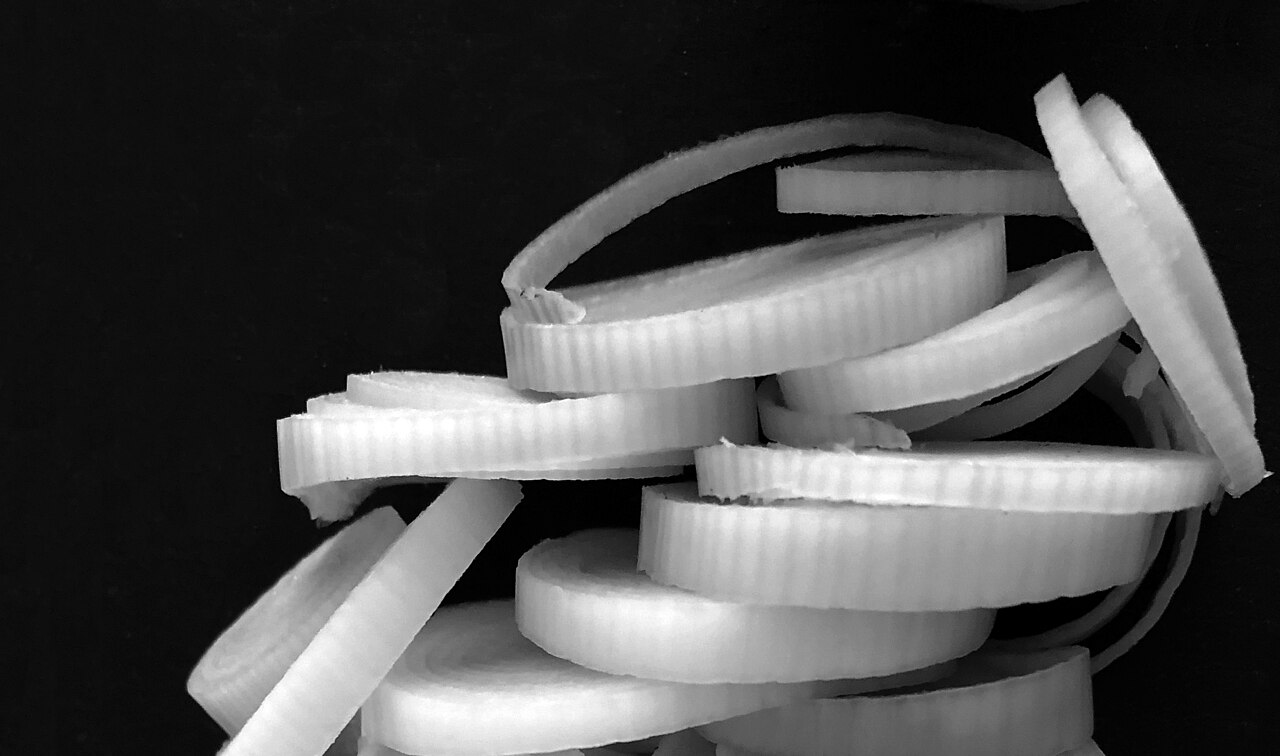
Trim and wash the whole stalk
- Rinse the outside. Wash away loose soil under cool running water. Remove the root disc and any damaged outer leaf.
- Trim the green end. Cut off the tough, dark-green leaves; keep the tender pale-green and white portion for slicing. Clean, firm tops can be saved for stock, as University of Minnesota Extension notes.
- Split to reach the grit. For halves or long sections, cut lengthwise through the stalk and fan the layers open. Rinse between the leaves under cool water. Purdue Extension and South Dakota State University Extension both describe splitting and rinsing leeks to remove soil between layers.
Cut rings or half-moons
Rings: Lay the trimmed stalk flat and slice straight across. Choose the thickness your recipe needs. If you see soil between the rings, wash the pieces before cooking.
Half-moons: Split the stalk lengthwise through the portion you plan to use. Place each half cut-side down so it stays steady, then slice crosswise. Each cut makes two shorter arcs; the layers may separate, so rinse the pieces before cooking.
Wash pieces after slicing
For either shape, put the cut leek in a bowl of cool water and gently move the pieces to open the layers. Leave them briefly so soil can sink, then lift the leeks into a strainer instead of pouring the gritty water over them. Maine Cooperative Extension’s leek soup guide uses this bowl-and-lift method. Its quarter-inch slice is an example for that soup; follow your own recipe for size.
For other vegetable shapes and recipe-cut terms, see our Japanese vegetable-cutting reference.
Check between a few pieces and rinse again if you still see grit. Drain well; blot the leeks if they will go into a hot pan. Keep the knife on the board, curl the guiding fingertips back, and stop to reposition the stalk if it rolls.