For fries or cubes, make a flat face first, then cut slabs, sticks and crosscuts. For wedges, divide the potato lengthwise and angle the cuts. These starting sizes are examples, not a universal standard: try about 6 mm for thin fries, 10–13 mm for thicker fries, or 15–20 mm cubes for roasting; follow your recipe when it specifies a size. Keep pieces in each batch similar in thickness. For sweet potatoes, see our separate cutting guide.
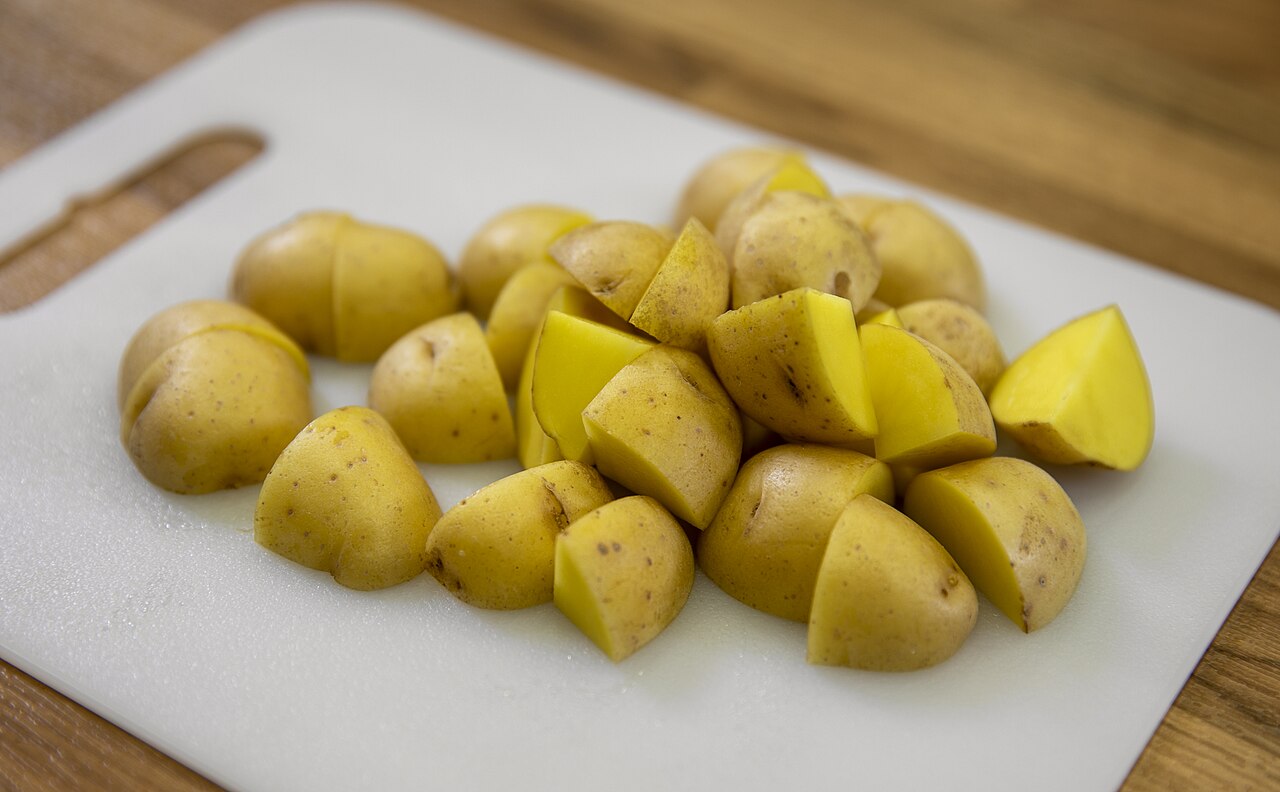
Prepare the potato and board
Rinse and scrub the potato under cold running water, then pat it dry. Purdue Extension notes potatoes can be cooked peeled or unpeeled. Peel if your recipe calls for it or you prefer it.
Set a stable board on the counter. On a round potato, slice a thin piece from one long side, then rest the potato on that flat face. Keep it flat-side down as you cut; curl the fingertips of your guiding hand. Mississippi State Extension recommends a flat base on round foods and curled fingers. If the board shifts, pause and reset it before cutting; if a wooden board rocks or shifts, see our guide to checking its stability.
Choose a cut
| Use | Cut sequence | Example size |
|---|---|---|
| Thin fries | Slabs, then lengthwise sticks | About 6 mm square |
| Thicker fries | Slabs, then lengthwise sticks | 10–13 mm square; USU Extension’s named French-fry cut is about 13 mm square |
| Roast cubes | Slabs, sticks, then crosscuts | 15–20 mm cubes |
| Wedges | Halves or quarters, then lengthwise angled cuts | Choose the number of wedges to suit the potato and recipe |
USU Extension’s knife-skills handout gives named cut sizes, including a 13 mm (½-inch) French-fry cut. The other measurements above are practical examples; recipe instructions take priority.
Fries: slabs into sticks
- Cut the potato in half lengthwise and place each half cut-side down.
- Slice each half lengthwise into slabs at your chosen thickness.
- Lay a slab flat and slice it lengthwise into sticks. If it is too wide to control, cut it into a narrower section first.
Cubes: sticks into even pieces
- Make flat-sided slabs, then cut them lengthwise into sticks.
- Turn the sticks a quarter-turn and cut across them at even intervals.
- For a more even batch, keep the slab and crosscut spacing consistent. Purdue Extension also recommends similarly sized pieces for roasting.
Wedges: cut along the length
- Halve the potato lengthwise and rest each half on its broad cut face.
- Cut each half lengthwise into quarters or smaller wedges. Angle the knife from the center toward the outer edge to make wedge-shaped pieces, rather than slicing straight across into flat rounds.
- Keep the cut side supported on the board; if a piece rocks, trim or reposition it to make a stable face before continuing.
If a sharp knife enters but begins to bind as more of the blade passes through, stop forcing the cut and check the blade and food position. Our guide explains why a knife can wedge in potatoes and other vegetables.