Choose a paring knife for close control while peeling, coring, trimming, or shaping small ingredients. Choose a utility knife when you want a little more blade for board slicing, small produce, or sandwich prep. If you already own a petty knife, compare its length and the way you use it before adding either.
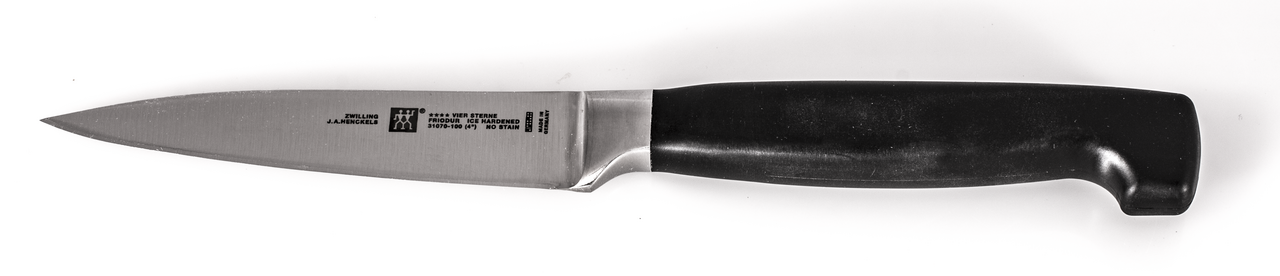
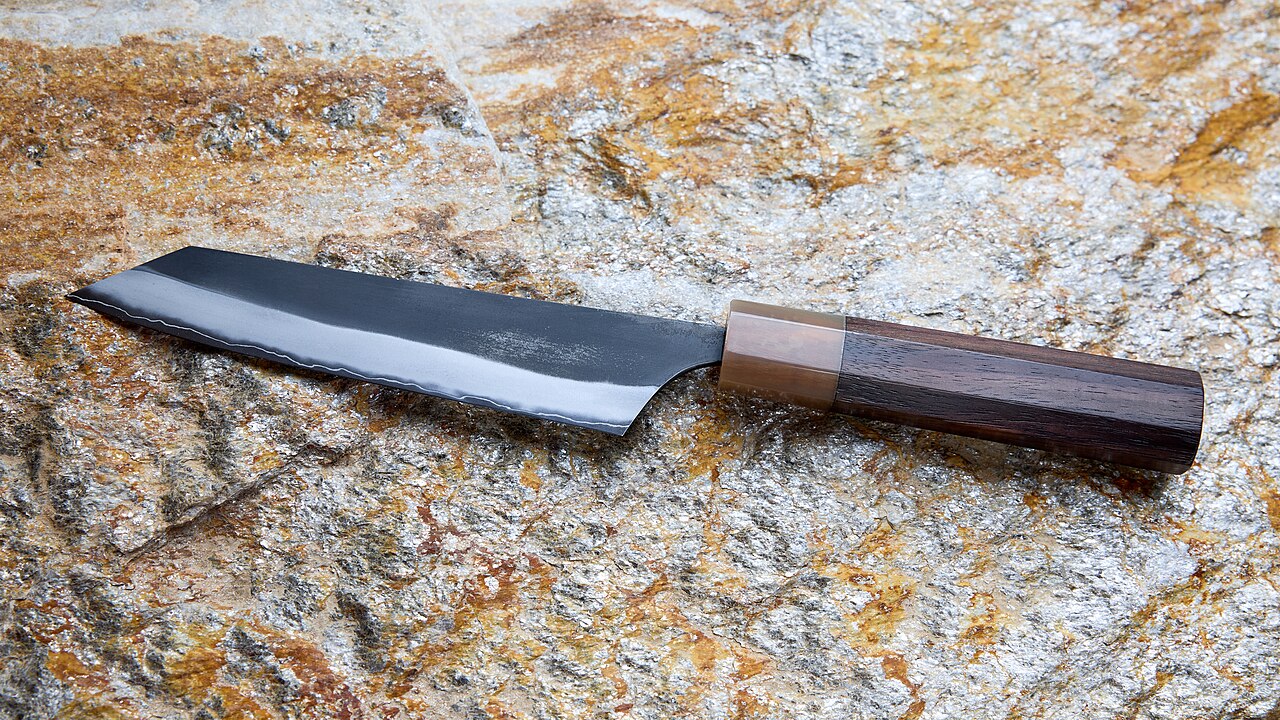
Start with where the cut happens
A paring knife is compact for close work: peel an apple, remove a strawberry stem, core a small fruit, or trim a blemish while holding the ingredient. A straight paring blade can also handle small board tasks; a curved peeling knife or serrated paring knife has a different shape for a narrower job. Check the exact model rather than assuming every paring knife has the same tip or edge.
A utility knife is the middle-size option in many Western-style ranges. It gives you more edge for slicing a tomato, cutting a small cucumber, trimming a sandwich, or preparing a modest amount of ingredients on a board. That extra reach can make a smooth draw cut easier than using a short paring blade. A larger chef’s knife may still be more comfortable when you have a full board of prep.
Paring vs utility at a glance
| Your repeated task | Start with | Why |
|---|---|---|
| Peeling, coring, hulling or garnish work | Paring knife | A short blade is easy to place close to the ingredient for controlled detail work. |
| Slicing small produce or making longer cuts on a board | Utility knife | More blade length gives room for a continuous slicing stroke. |
| Mostly small board prep, but you already own a petty | Try the petty first | A petty may already cover the gap; compare its length, height and handling before buying another knife. |
| Crusty rolls or ripe tomatoes | A maker-listed serrated model | Some paring and utility ranges offer serrated versions; check the exact blade’s intended use. |
Length helps, but the name is not a standard
WÜSTHOF describes its paring knives as roughly 2½–4 inches and its utility knives as roughly 4½–7 inches. Shun’s Dual Core lineup gives a concrete comparison: a 4-inch paring knife for detail work and a 6½-inch Master Utility for everyday board prep. These are examples from two makers, not universal category limits. Blade height, curve, tip, edge, and handle also affect control.
If the choice is close, write down the three small jobs you do most often. For peeling or work held in the hand, start with a compact paring shape. For board slicing where your current blade feels too short, try a utility length that feels controlled on your board. If you already have a petty, its longer reach may cover the same board tasks; our petty knife guide explains when that middle-size blade earns a place.
You do not need both by default. Choose the knife that solves a repeated awkward cut, then check the maker’s care and sharpening guidance for that exact model.
Sources: WÜSTHOF’s utility-knife guide (its category lengths and task examples); WÜSTHOF’s paring-knife guide (paring profiles and detailed tasks); Shun’s Dual Core lineup (maker-specific paring and utility examples and dimensions).