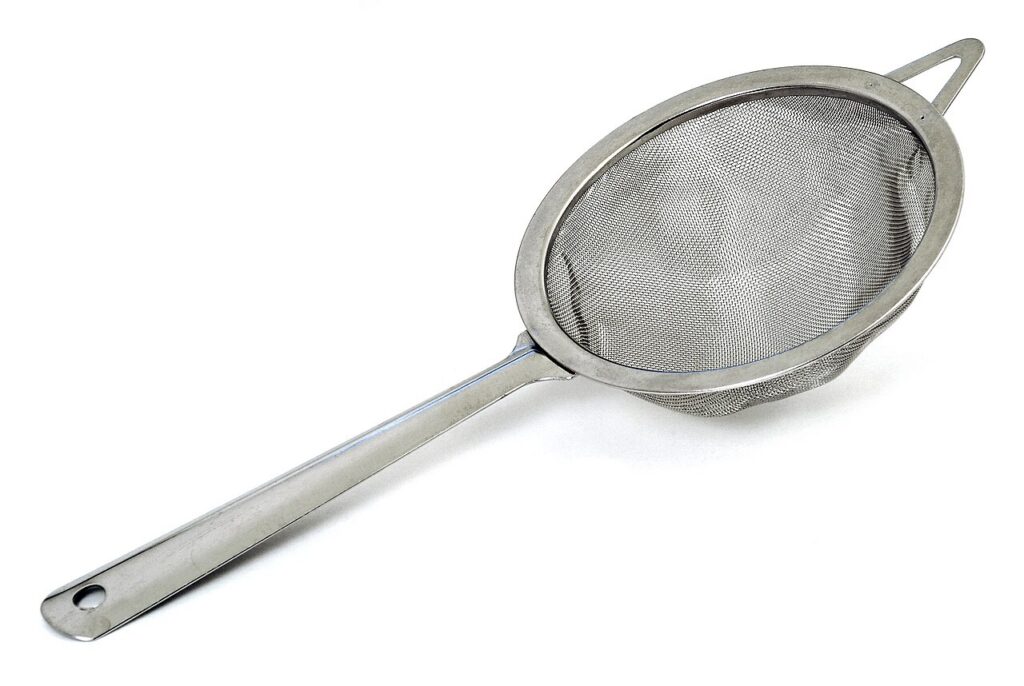
Choose a colander for draining a large batch, a fine-mesh strainer when small pieces must stay in or seeds and lumps must be caught, and a sieve when you need to pass a dry ingredient or liquid through mesh. The labels overlap in product listings, so choose by the actual opening size, capacity and fit over a bowl—not the name alone.
Choose by the task
| Your task | Useful form | Check before pouring |
|---|---|---|
| Drain pasta or rinse a large pile of vegetables | A colander with enough capacity and stable feet or handles | It fits your sink or bowl and its holes retain the food. |
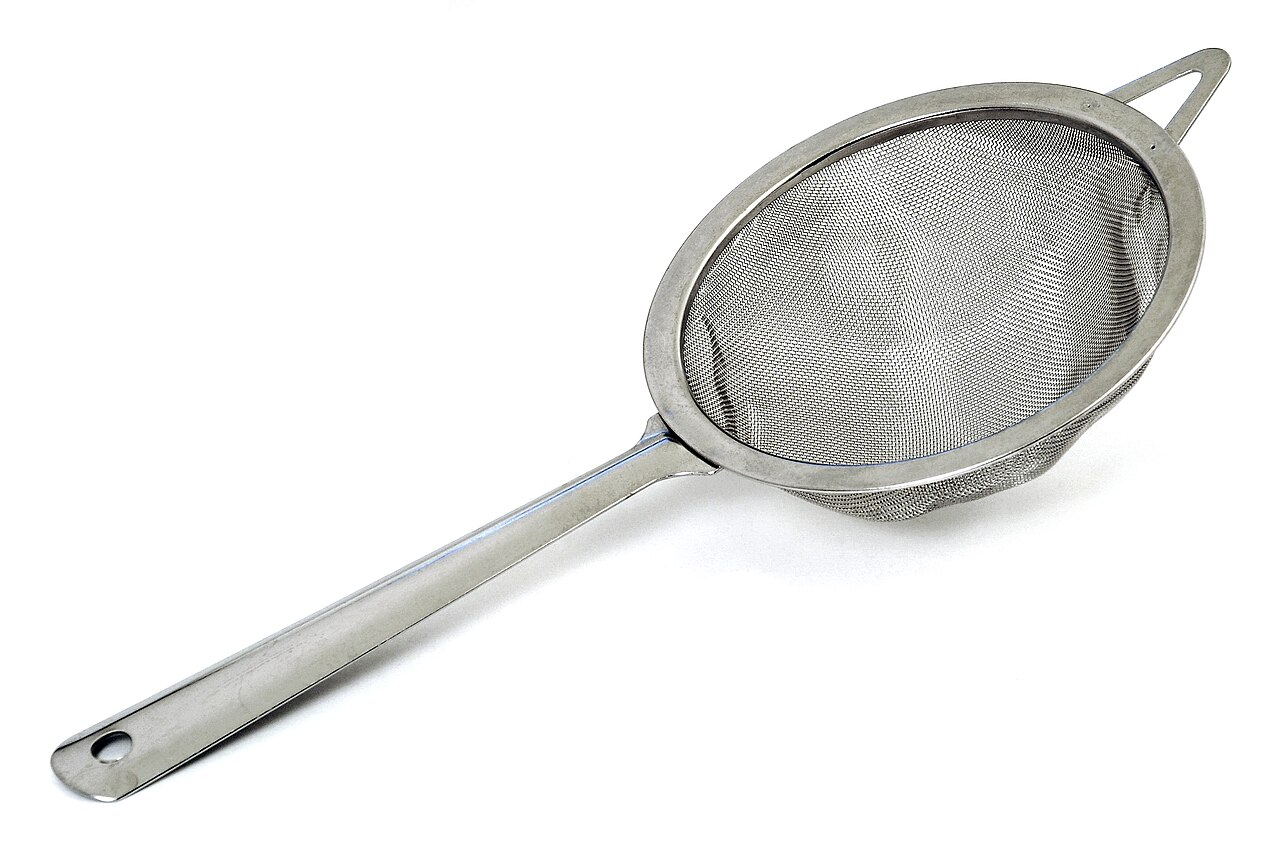
| Rinse berries or catch seeds while juicing citrus | A fine-mesh strainer sized for the batch | Mesh is fine enough for the smallest pieces you want to keep. |
| Sift flour or catch lumps from a liquid | A fine-mesh sieve or strainer that rests over a bowl | The bowl supports it; for hot liquid, check the tool’s heat and handle guidance. |
| Lift food from a pot while leaving liquid behind | A skimmer or scoop-and-strain tool | This lifts a portion; it does not drain a whole pot into a receiving vessel. |
For large batches, use a colander
A colander’s bowl and perforated sides are useful when a pot or a generous pile of produce needs to drain together. OXO describes its stainless-steel colander for draining pasta and rinsing fruit or vegetables; raised feet let it sit over a sink or counter. Match the capacity to the batch and confirm that its feet or handles have a stable place before tipping hot food.
For small pieces and liquids, use mesh
Fine mesh holds smaller solids than broad perforations. OXO’s three-piece strainer set gives a useful task example: its mini strainer separates citrus seeds and pulp, the medium strainer rinses berries, and the large one drains pasta. That does not mean you need three tools; choose one that retains the food and rests securely over the bowl or cup you are using.
A sieve or fine-mesh strainer also works for sifting. King Arthur Baking describes tapping flour through a fine-mesh strainer to break up clumps and aerate it. For a liquid, mesh catches solids while the liquid falls into a bowl below. If the liquid is hot, check the handle and heat limits for your particular tool and make sure the receiving bowl is steady.
Draining is different from lifting
A slotted spoon or mesh skimmer lifts a portion from a pot while allowing liquid to fall back. A colander drains the whole batch into a sink or receiving bowl. The mesh-skimmer vs ladle guide covers surface-skimming and lifting; a fine-mesh miso strainer has its own role for dissolving paste in soup.
Before using any strainer, compare the food’s smallest pieces with the openings, then check that the rim or feet sit securely on the receiving bowl. These checks matter more than whether a product is marketed as a sieve, colander or strainer.
Sources: OXO colander examples; OXO strainer tasks; King Arthur Baking on sifting flour.