A fresh food smell noticed immediately after preparation points first to transferred residue. A sour odor that persists after suitable cleaning and complete surface drying—or disappears and returns after storage—is a different pattern that deserves assessment. Smell alone cannot identify bacteria, mold, internal rot or tang corrosion, so it cannot decide between refitting and repair.
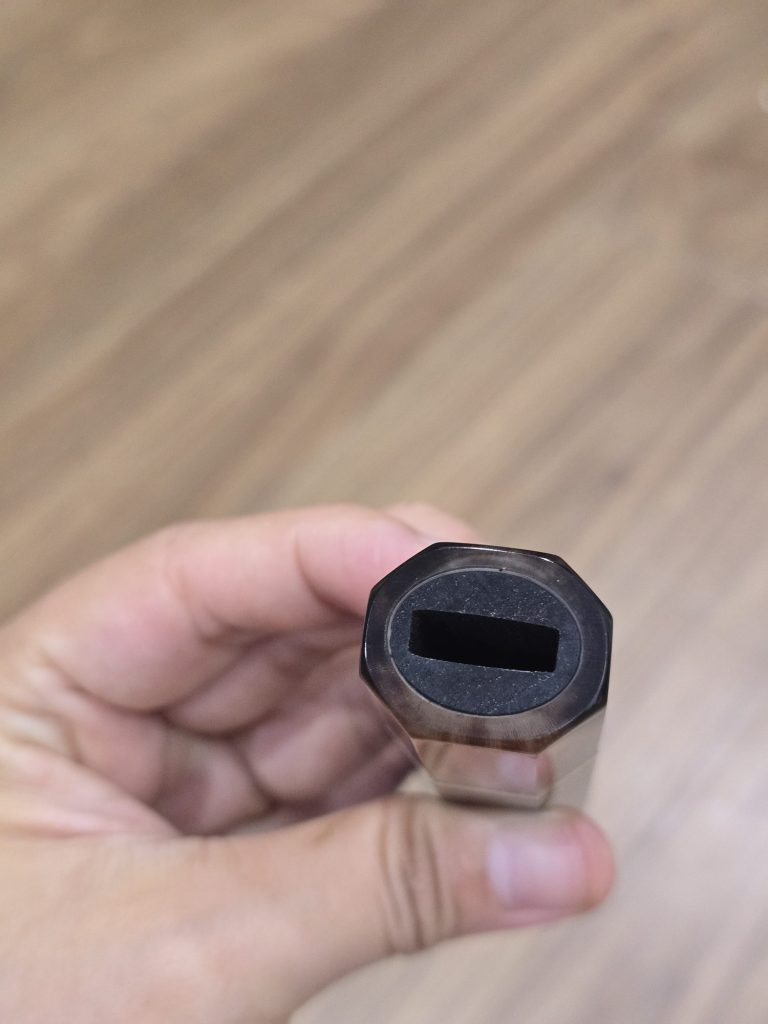
Build a history of the odor
Record what happened before the first occurrence: the food prepared, whether the handle remained wet, any prolonged water or heat exposure, and whether the knife was enclosed before it was dry. Confirm whether the odor comes from the handle rather than a sheath, guard, blade or storage space.
Then note the pattern after ordinary care:
- Did the odor remain once the surface was clean and dry?
- Did it resolve in open, dry storage and return after the knife was enclosed?
- Is it concentrated near the ferrule or front junction?
- Are there accompanying cracks, gaps, swelling, movement, darkening, tackiness or lifted finish?
Do not probe a joint to investigate the smell. Photograph visible changes instead. The Japanese Knife Imports care guidance supports hand washing, prompt drying and avoiding prolonged water and heat exposure. Its occasional oil guidance applies only to suitable natural-wood handles; oil is not an odor treatment and should not be applied unless the actual finish and product directions allow it.
Keep food hygiene separate from diagnosis
The FDA’s seafood-safety guidance calls for preventing transfer from raw seafood to ready-to-eat food and washing hands, utensils and preparation surfaces between those tasks. That general advice does not establish that bleach, a dishwasher, soaking or any particular sanitizer is compatible with a wood-and-horn handle. A clean-looking or faint-smelling surface is not proof of sanitization.
If a suitable hygiene procedure for the knife’s construction is uncertain, use a different clean, suitable utensil for food preparation while the handle is assessed.
When the joint needs assessment
Persistent odor without visible damage does not automatically require replacement. However, odor combined with a crack, detached ferrule, changing gap or movement gives the joint greater significance. Sakai Ichimonji notes that cracks and ferrule damage can allow moisture into the tang area and that corrosion may compromise repairability.
For an ordinary food odor that resolves with compatible care, see the wood-odor guide. For ongoing maintenance, use the wa-handle care guide.