Do not choose between black palm and wenge by name alone. When the palm material is uncertain, identify the wood and confirm availability first; then compare dry pieces at the same proposed handle dimensions. Without matched samples, neither wood is a universal light or heavy winner.
Resolve what “black palm” means
H&G’s wood guide helps distinguish named choices, but the configurator currently treats Palm Wood as a generic request-only option. It does not establish a particular black-palm species, ready stock or a guaranteed material. An exact comparison therefore begins with the identity and condition of the actual piece, not a trade name.
A 2021 Institute of Wood Science and Technology study of Borassus flabellifer found that specific gravity and vascular-bundle frequency increased from the centre of an identified palmyra stem toward its periphery. That demonstrates meaningful variation within one palm stem. It does not show that every wood sold as black palm or Palm Wood is palmyra, nor does it supply a weight for an unidentified handle blank.
What the wenge option establishes
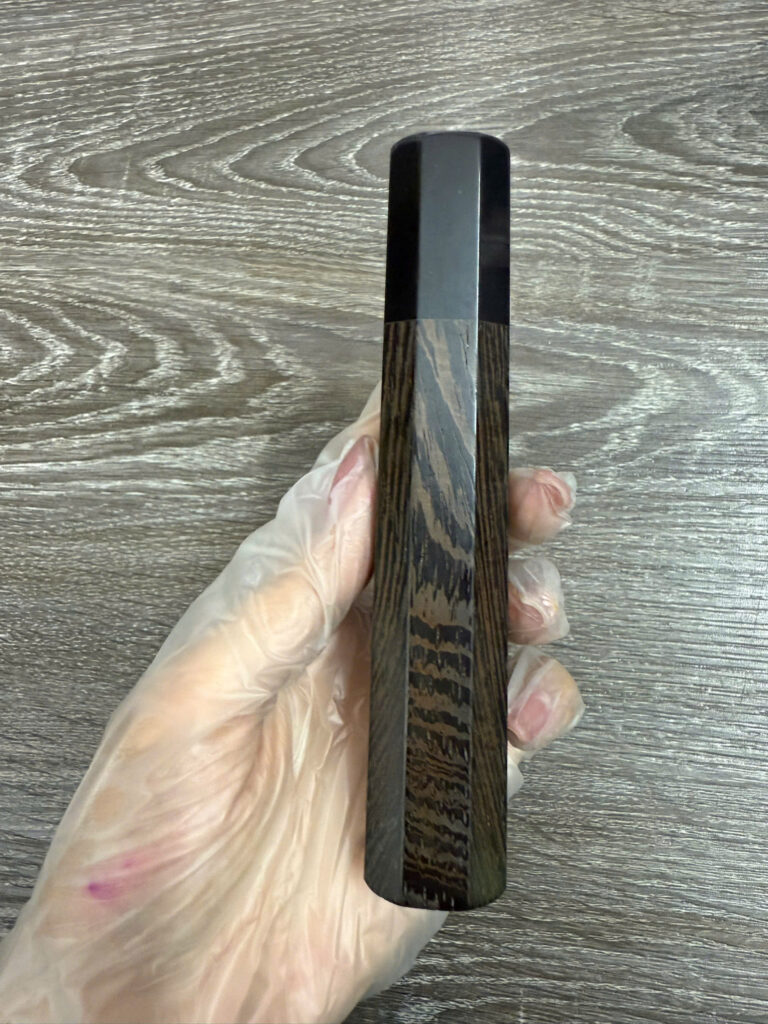
The wenge wa handle is currently available from Horn & Grain. Its wood is described as dark espresso brown with near-black veins and a coarse, open visible grain. That appearance is useful when choosing a design, but a rough or splintery finished grip is not a benefit to expect from the grain description.
Compare rear weight fairly
Use the same intended outer geometry for both materials and compare them dry. Account for the ferrule, any end cap and the material removed for the tang cavity; all affect the completed handle’s mass and where that mass sits. The knife must also be part of the judgment because the same handle can produce a different balance impression on a different blade.
More rear mass is a preference, not an upgrade. Wenge is the actionable known option here. A black-palm alternative becomes comparable only after the exact material and its availability are confirmed.