A crack’s width does not determine whether the wood can be repaired or the handle should be replaced. The useful decision comes from its location and extent, what material remains, whether the ferrule or tang area is involved, and how strongly the owner wants to preserve the original handle.
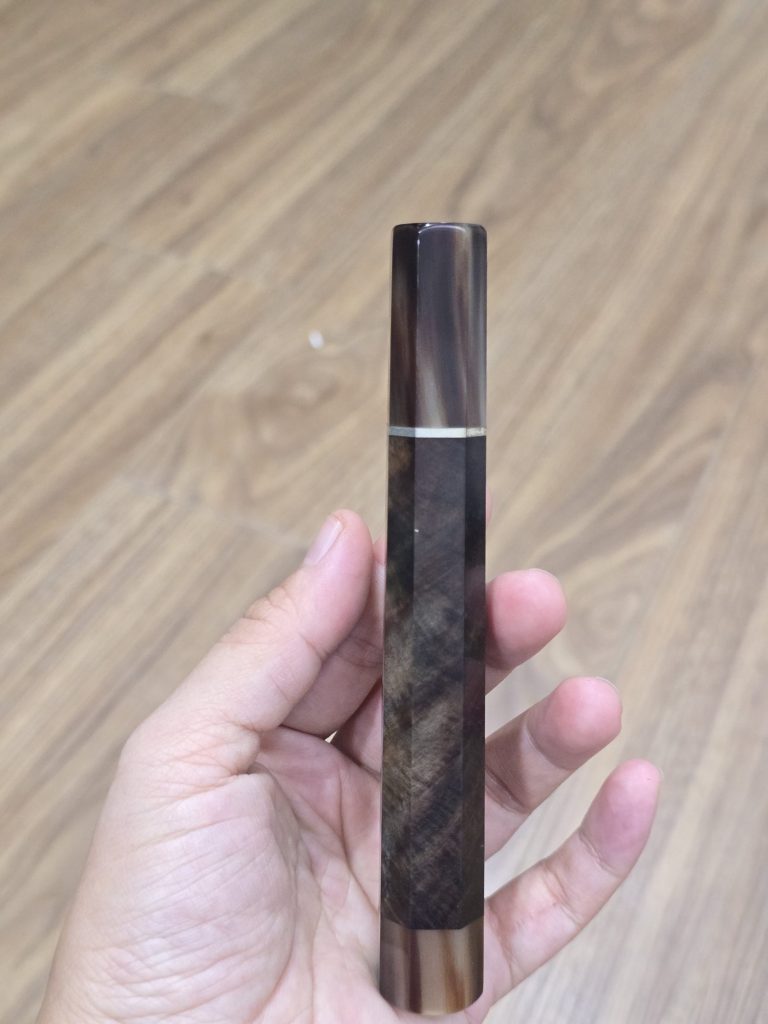
Questions that change the decision
Where does the opening run? A localized opening within the wood presents a different assessment from one that reaches the tang socket, crosses the horn-to-wood seam or accompanies a detached ferrule. Record every face it reaches rather than judging it from the most visible side.
Is the original material still present? Note missing chips, lifted edges or sections that no longer meet naturally, but do not flex or probe them. A controlled repair may be considered when an assessor finds suitable material and a stable surrounding structure; appearance alone cannot establish that.
Has the joint changed? Existing blade movement, ferrule movement or a changing front junction shifts attention from a cosmetic wood defect to the integrity of the assembly. Sakai Ichimonji’s handle-replacement guidance explains that cracks and ferrule damage can allow moisture into the tang area, while corrosion can compromise repairability. It treats cracked or detached parts as reasons for replacement assessment, not as a promise that replacement will always succeed.
What is known about the tang? If it is already exposed, visible corrosion, deformation or material loss matters to both repair and replacement. Do not remove a secure handle solely to inspect or measure it. Hidden tang condition cannot be certified from the exterior.
Preservation and replacement are separate choices
Preserving distinctive wood may justify asking whether controlled repair is feasible, but preservation cannot override an unsound joint or damaged tang. Conversely, choosing replacement does not settle compatibility. KAI’s replacement-handle information notes that individual tangs and handle openings vary, adjustment may be required, and a stated match is not guaranteed.
Give the assessor clear photographs, the crack’s observed history, any material loss, ferrule or blade movement, and relevant exposure or previous-work details. If replacement is selected, the reshafting guide explains the high-level route. Once the knife is structurally resolved, return to the wa-handle care guide for ordinary care appropriate to its actual materials and finish.