The photographs you need depend first on whether the handle is securely installed or the tang is already exposed. Leave a secure handle in place: installed-handle photographs can document proportions and the visible junction, but they cannot reveal the hidden tang’s length or full dimensions.
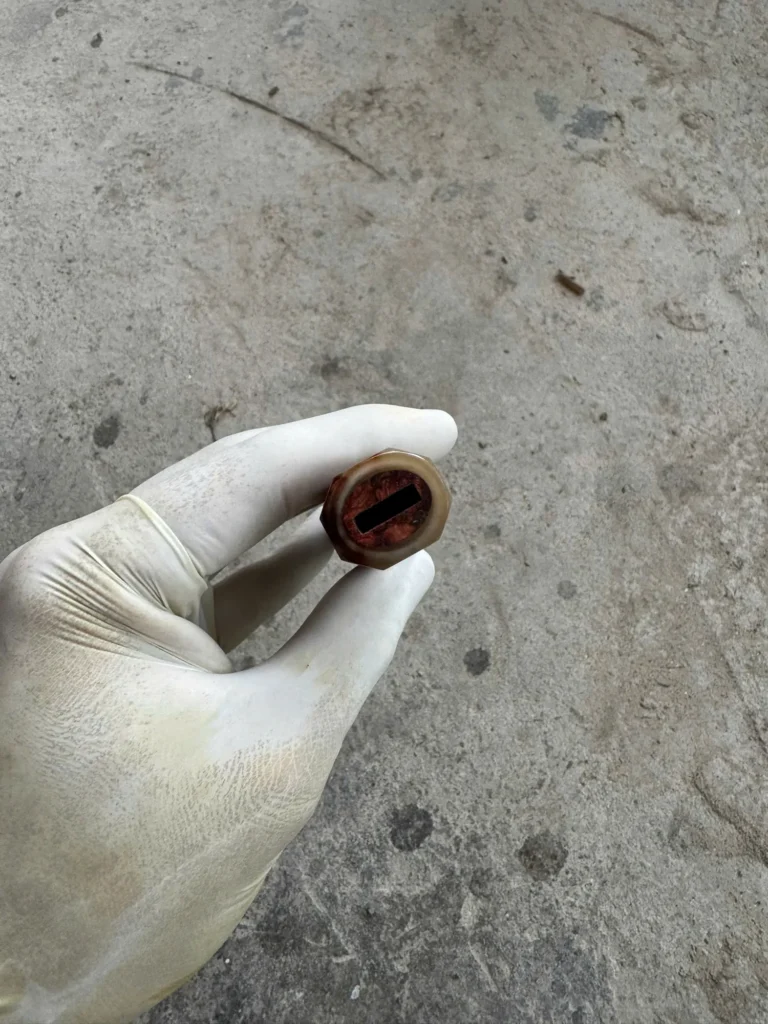
Photographs with the handle installed
An overall side view of the complete knife and handle is useful optional context for their relative proportions, without pretending to provide an exact measurement from perspective.
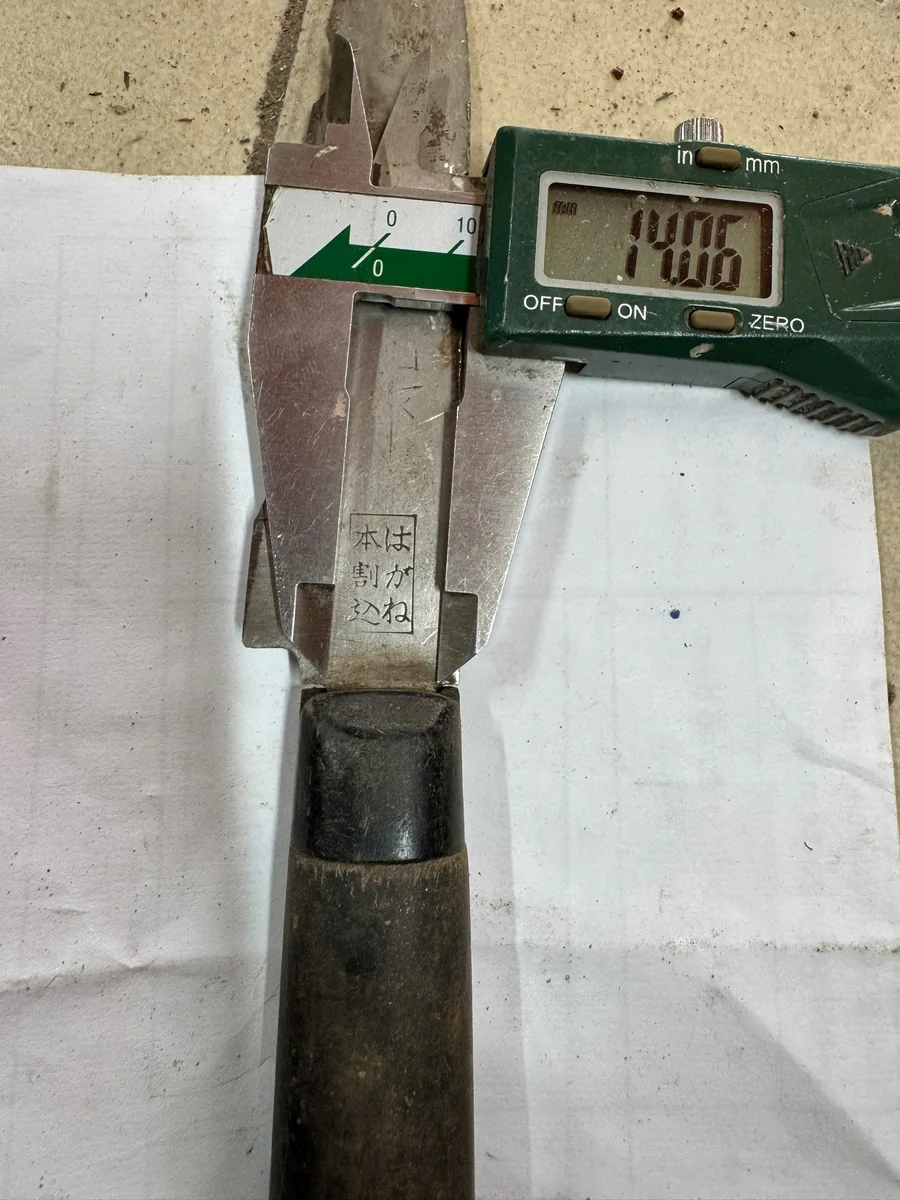
- Close side view of the junction: show where the blade or tang enters the ferrule and any visible gap, movement, damage or uneven seating.
- Close spine view of the junction: show alignment and the accessible width or thickness at the junction.
- Choil-end view: if it can be taken safely, this can add cross-section and orientation context.
Visible junction height and thickness are useful partial evidence only. They are not measurements of the concealed tang, and no installed-handle photograph establishes hidden tang length. Do not remove a handle that remains secure merely to obtain more information.
Photographs when the tang is already exposed
Record exactly three primary dimensions in millimetres:
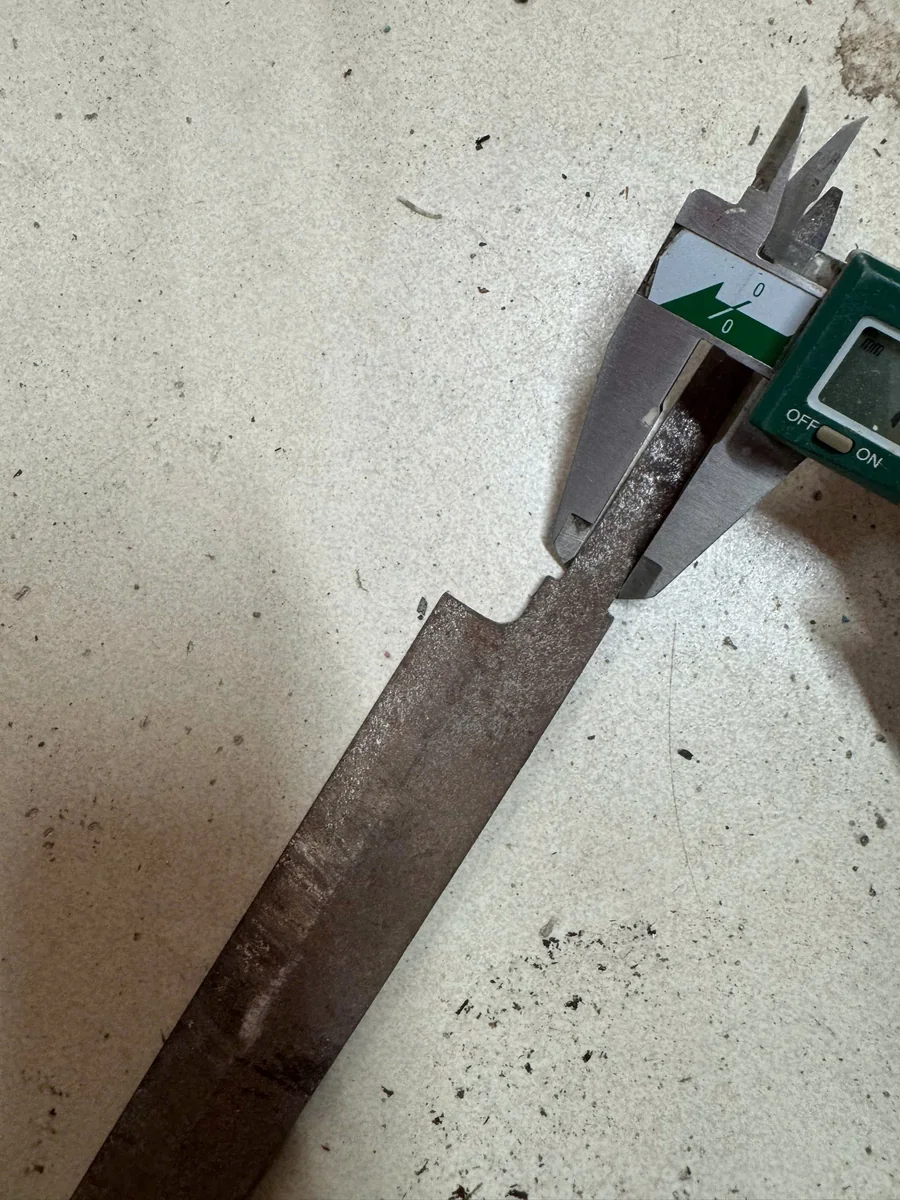
- Usable tang length from the shoulder or seating line to the tip.
- Tang height near the shoulder.
- Face-to-face tang thickness at that same station near the shoulder.
Photograph each measurement with the scale readable and both relevant endpoints uncropped. Keep the camera square to the scale or measurement plane. For thickness, show an actual face-to-face measurement; a side photograph cannot establish that dimension.
Make each photograph usable
Use diffused light, sharp focus and a plain background. Avoid glare that hides the junction or scale, and do not derive exact dimensions from perspective. Keep the knife stationary on a safe surface, with fingers away from the edge, and never pose the point or edge toward the camera.
Optional context
Handle length, blade length, maker and model, and wider photographs may help explain the knife, but they do not replace tang evidence. The wa-handle size guide can help interpret external handle proportions; it does not prove socket compatibility.
If a junction, endpoint or scale is unclear, the appropriate result is a request for clarification—not a fit guarantee. The purpose of this shot list is simply to distinguish visible evidence from dimensions that remain unknown.